


2018 School Spending Survey Report
Q & A: 'Positive' Author Paige Rawl Talks About Her Story as an HIV Positive Teen
Paige Rawl was born with HIV but didn't know she had it until middle school. She also didn't know about the stigma and bullying that came with it. Rawl shares her story Positive not only to cope with her past, but to offer solace and courage to those going through a similar experience.
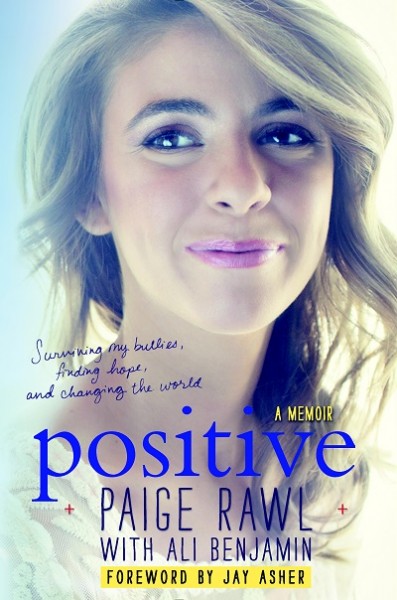 College student Paige Rawl was born with HIV and discovered her status when she was in middle school. Though she took the realization in stride, her fellow students didn’t: when she told another classmate, bullying and ostracism ensued. The experience was incredibly painful—resulting in deep depression and even a suicide attempt—but Rawl was able to turn tragedy to triumph, as she relates in her aptly named memoir, Positive (HarperCollins, 2014), which releases in August, a work that she believes will bring hope and inspiration to other young people facing the same struggles she had. She also serves as an HIV/AIDS educator and an advocate against bullying. Rawl recently spoke to SLJ, discussing how her HIV status made her a target, her advice for young people, and what she hopes teachers and educators working with bullied kids can learn from her story. What was it like when you first realized you had HIV? It wasn’t a big deal to me. I thought that HIV was like any other disease. I thought it was just like asthma, which I also have. When I was growing up, all of the doctor’s appointments and medication seemed just like a normal thing. I was so used to it all that I didn’t see anything wrong with it. Do you find that decades later there’s still misinformation about HIV/AIDS? I do believe there’s a lot of misinformation still out there about the disease. I think that schools need to have more education. Lack of education leads to ignorance, which leads to stigma aimed at those with HIV/AIDS. People still believe that you can contract HIV through casual contact or a toilet seat, when both of those beliefs are completely false. If there was more education, our society would begin to view people with HIV as just like everyone else. Which we are. Was it challenging to reveal so much of yourself in this memoir? I did find some parts difficult to discuss—and to just lay out there for other people to see. There were points in writing the book where I wanted to cry (and even did cry), but that just made me realize how important it was that I share my story, educate others, and advocate against bullying. It made me see even more that things need to be done so no one has to go through what I went through! You spoke of looking at photos of your middle school self and observing how happy you appeared. Was it cathartic to be able to tell the truth about what you were going through by writing this memoir? At first, for me, sharing my story and what I had been through was a way to cope with everything that happened. The first time I spoke about it, I felt like a giant weight had been lifted off of my shoulders. So, in that sense, you could say that it was appealing. But mainly sharing my story and telling the truth of it all will help others in the future, and that is the most appealing part. You’ve faced a number of challenges at such a young age. What has been the most difficult obstacle you’ve had to deal with? The most difficult obstacle that I have personally dealt with is the effect of being bullied. Being bullied can leave a painful, open wound that no one can see but that the victim can definitely feel. When I was a freshman in high school, I was at a new and great school, I had left my bullies behind, but I was still struggling with what I had been through. Learning to cope with the bullying, learning to manage with the fear of being bullied again, and learning how to take the bullying and help make a difference for other victims—that was the biggest thing I’ve had to overcome, not HIV. Telling a friend led to the bullying but also to your finding the strength to fight against ostracism and the stigmatization of HIV. Did you ever regret being open about it? I have never regretted telling my best friend in sixth grade. I personally believe that everything happens for a reason. I wouldn’t be where I am today if I hadn’t gone through what I did. I decided to take a bad situation and turn it into something good. Surviving the bullying because of my HIV status gave me the strength to speak out and share my story to help others. A big part of your struggles involved the school administration, who did so little to protect you from the cruelty of your classmates. Have you found this is a common experience for other kids with HIV who are open about their status? Most of the other kids that I know that have HIV are actually not open about their status. They keep it from their friends and teachers at school. They seem to be too afraid of what other people may think and how the way that other people treat them might change. The few that I do know that have tried to be open about it have dealt with some similar issues that I [had experienced], of not being accepted or being bullied because of it. What advice would you give to adults working with kids facing bullying? Teachers, principals, and parents should provide a place of trust, safety, and acceptance when kids or teens go to them with things like bullying. And adults should really listen to what they are being told. They should know that it took a lot of courage for the victim to come to them. And, finally, I believe that the adults should not tell students to hide something about themselves to avoid bullying. They should not be counseled to pretend to be what they’re not. Adults should show victims that it’s okay to embrace something that makes them different from their friends or peers. Bullies should be counseled that differences are not weaknesses to be exploited. What’s next for you? I’ll be getting my degree in molecular biology to become an HIV/AIDS medical researcher. I want to be in a lab and work towards new treatments and possibly a cure for this disease. I plan to continue to dedicate my life to educating about HIV/AIDS, sharing my story, and advocating against bullying! What words of advice do you have for teens facing a similar situation as you? Don’t let what you have or what you may be going through define who you are. I would like them to know that it’s okay to ask for help. It takes a lot of courage to ask an adult to help you, especially if it has something to do with a thing like bullying. If the adult you first go to doesn’t seem to want to help, then go to another adult. Don’t give up until you find someone who will listen.
Added To Cart
RELATED


RECOMMENDED
CAREERS
The job outlook in 2030: Librarians will be in demand
CAREERS
The job outlook in 2030: Librarians will be in demand
ALREADY A SUBSCRIBER? LOG IN
We are currently offering this content for free. Sign up now to activate your personal profile, where you can save articles for future viewing
ALREADY A SUBSCRIBER? LOG IN
Thank you for visiting.
We’ve noticed you are using a private browser. To continue, please log in or create an account.

Add Comment :-
Comment Policy:
Comment should not be empty !!!
jesse mcelwee
what is this?Posted : Oct 30, 2019 03:57