Technology
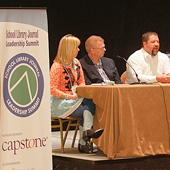
Impassioned, creative, dynamic, evolving and cool—these are just some of the words that the sponsors of SLJ’s annual Leadership Summit used to describe their companies’ latest developments. Joyce Valenza, SLJ blogger and teacher librarian, lead a panel discussion with the companies to examine the relationships between vendors and schools, the importance of strong content, and the ways that vendors can help educators in support of the Common Core.

Technology makes everything simpler and more efficient, right? Maybe not always, but with teachers' class sizes increasing, we're all looking for tools to help manage their work load. Teacher librarian Phil Goerner shares info about a free Chrome extension that has been useful at his school. Kaizena allows teachers to grade student work and provide audio feedback, comments, or even a URL link right on their shared Google Doc.

From educational equity and fan fiction to Kanye West and serious games, educator Antero Garcia brought it all together in a rousing keynote, inspiring attendees of the September 28-29 School Library Journal Summit in Austin, TX. The complete presentation is viewable here, along with additional comments from Garcia and related resources on participatory culture.

STEAM (science, technology, engineering, arts, and math) is part of a new trend that integrates hands-on learning with STEM. It taps into children’s natural interests while also facilitating informal learning. Show Me Librarian Amy Koester shares how school and public librarians can incorporate STEAM into their programs.

Children's librarian Amy Koester shares some of her go-to STEAM (science, technology, engineering, art, math) programs, for all ages.
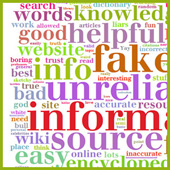
A recent, voluntary survey of 3,000 high school students by EasyBib, the online citation and research platform, shows that kids are wary of Wikipedia’s accuracy—but still turn to it as a primary research tool—and they condemn plagiarism, though it remains an issue for high schools. The survey also finds that students are increasingly seeing libraries as providers of tech resources.
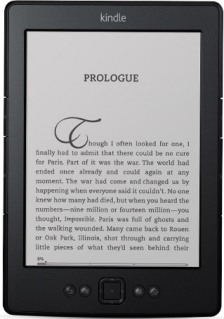
In a quick reversal of its position on Kindle lending, Penguin on September 26 loosened the terms of its renewed agreement with OverDrive, announced only the day before. The publisher has agreed to allow library patrons to download ebook titles wirelessly via OverDrive’s “Get for Kindle” function instead of, as initially announced, first downloading titles to a computer, and then side-loading those titles to their Kindle classic or Paperwhite using a USB cord.

The Education Library Networks Coalition—which includes the American Library Association and the International Society for Technology in Education—is calling on the Federal Communications Commission to double the funding for E-rate, according to EdLiNC’s co-chair Jon Bernstein. The coalition also asks that the E-rate program offer more “scalable” goals for local entities, with limited national mandates.

“Penguin will resume doing business with OverDrive as of this morning,” Penguin spokesperson Erica Glass told LJ on September 25. According to a blog post by Karen Estrovich, collection development manager for OverDrive, 17,000 Penguin ebooks are already “live and available for purchase in OverDrive Marketplace.” Although Estrovich refers to the transaction as a purchase, the books are being offered for a one year term on a one copy/one user lending model.
1,680 articles
ALREADY A SUBSCRIBER? LOG IN
We are currently offering this content for free. Sign up now to activate your personal profile, where you can save articles for future viewing
ALREADY A SUBSCRIBER? LOG IN
Thank you for visiting.
We’ve noticed you are using a private browser. To continue, please log in or create an account.