Research

Interest is the engine of intellectual achievement—it’s what drives us to keep learning, keep trying. But how does one generate it in oneself or others? Expanding on her keynote message at the SLJ summit, author Annie Murphy Paul offers three practical ways to use information gaps to stimulate curiosity.

The very limitations of the book are its strengths, according to journalist and author Annie Murphy Paul, speaking at School Library Journal’s 2013 Leadership Summit in Austin, TX.
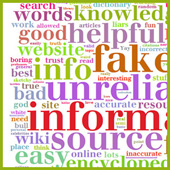
A recent, voluntary survey of 3,000 high school students by EasyBib, the online citation and research platform, shows that kids are wary of Wikipedia’s accuracy—but still turn to it as a primary research tool—and they condemn plagiarism, though it remains an issue for high schools. The survey also finds that students are increasingly seeing libraries as providers of tech resources.
Turnitin today announced that an eight-year efficacy analysis shows that high schools using the company’s plagiarism prevention technology are currently experiencing at least a 33 percent drop in unoriginal content in their students’ writing. The study analyzes more than 36 million student papers from 2,862 high schools.

Brenda Boyer, Della Curtis and I are trying to better understand the state-of-the-art relating to digital curation across LibraryLand. And we hope you’ll help us share and distribute this 10 or 15-minute survey among your colleagues and friends in public, academic and special libraries. We welcome additional school library participation and we are especially interested in expanding our [...]

The University of London’s Institute of Education (IOE) has released a study showing that children who read for pleasure are likely to do significantly better at school than their peers. The study, which is one of the first to examine the effect of reading for pleasure on children's cognitive development over time, finds that children who read for pleasure made more progress in learning math, vocabulary, and spelling between the ages of 10 and 16 than those who rarely read.
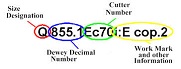
A good library orientation can make the rest of the year easier for students and teachers, as well as for you and your staff. Make it fun and the facts will be more memorable. This year, the Guybrarian is using the scavenger hunt method, with a few tech twists.
According to U.S. Census Bureau statistics released today, college enrollment in fall 2012 plunged by half a million (467,000) from one year earlier. This decline, which includes both graduate and undergraduate enrollment, follows a period of substantial growth (3.2 million) between 2006 and 2011. INFOdocket editor Gary Price examines the data, including relevant K–12 statistics.
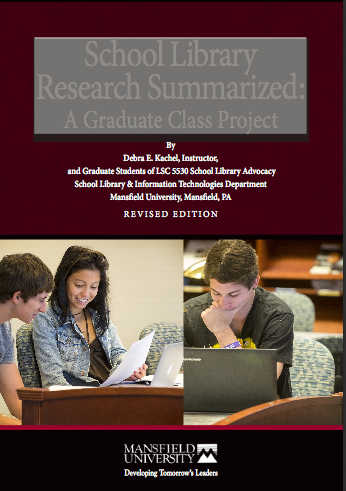
(Note: I just realized that I created a draft of this post a few weeks back, but forgot to publish. Forgive me!) Deb Kachel, my colleague at the Mansfield SL&IT, just shared her latest revision of School Library Research Summarized. The revised booklet updates the work of Deb’s grad students in her Spring 2011 Advocacy [...]
261 articles
ALREADY A SUBSCRIBER? LOG IN
We are currently offering this content for free. Sign up now to activate your personal profile, where you can save articles for future viewing
ALREADY A SUBSCRIBER? LOG IN
Thank you for visiting.
We’ve noticed you are using a private browser. To continue, please log in or create an account.