News & Features
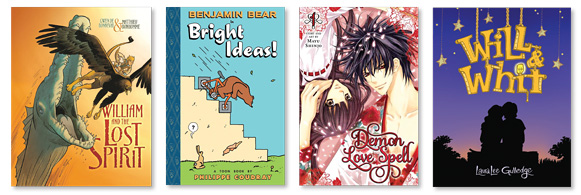
Philippe Coudray’s Benjamin Bear in Bright Ideas! Is laugh-out-loud funny.
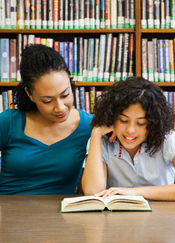
The vast majority of parents with children younger than 18 feel libraries are very important for their kids, leading to higher-than-average use of a wide range of library services, a new national report from the Pew Research Center shows.

Burn Note gives users the feeling that they can talk to anyone about anything because each text conversation “self-destructs,” much like Snapchat (the real-time picture chatting application) does with images.

Emily Murdoch explores kidnapping, selective mutism, and drug abuse in her debut novel 'If You Find Me'. Which group will get school funding, cheerleading or the robotics club? In Prudence Shen’s 'Nothing Can Possibly Go Wrong' the two cliques take the fight to the school election. If you never thought the Burning Man Festival would show up in teen fiction, think again—a local boy and a gypsy girl connect there in Elana K. Arnold's 'Burning'. Does R.L. Stine still have his horror chops? Read our reviewer's take on 'A Midsummer's Night Scream', and decide for yourself.

"The boys" still have their stuff on New Kids on the Block’s '10', the follow-up to their 2008 'Greatest Hits' reunion album, while OneRepublic has continued to add polish and range on their highly collaborative new album, 'Native'.
Johnsonville Sausage wants to learn about the educators that make your school, town and community a better place to be. If you or a colleague are helping to "create better places to live through actions taken both inside and outside the walls of the classroom," are a U.S. citizen over the age of 18, and are employed in a school or organization that supports education, you're eligible to apply for the 2013 Johnsonville Best of Us award.

Students are provided with curriculum in much the same way that religious adherents are provided with scripture, as something whose source and authorship are not be discussed, much less questioned.
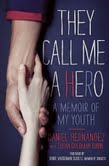
By the time students reach grade 12, the Common Core State Standards require that 70% of their reading should be nonfiction. In order to fulfill this requirement in content area subjects, students will need to read more than their textbooks. Luckily, nonfiction writers for teens continue to create amazing narrative nonfiction that supports science and social studies, and that our kids will want to read.
National Screen-Free Week has finally arrived—and, if you’re reading this, you probably haven’t yet taken the pledge to dramatically reduce the time you spend using a computer for the next few days. But many educators (and a kid lit publisher or two) are doing just that, encouraging kids to explore a range of non-screen activities this week, including reading books, going outside, and having fun the old-fashioned way.
11,635 articles
ALREADY A SUBSCRIBER? LOG IN
We are currently offering this content for free. Sign up now to activate your personal profile, where you can save articles for future viewing
ALREADY A SUBSCRIBER? LOG IN
Thank you for visiting.
We’ve noticed you are using a private browser. To continue, please log in or create an account.