Books. Nonfiction
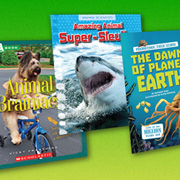
Animal books don't sit on the shelves long, and the best of these series will keep students thinking long after they've finished reading. Poison dart frogs, feral pigs, and Tasmanian devils are just a few of the wild things covered here.

Vampires, zombies, werewolves, witches, and other familiar topics are covered yet again in this season’s selections. mythology and paranormal series. Sensational appeal is reflected in gory picture choices and in the phrasing of titles. Several series play on the idea of mystery, both in their titles and in posing a central question: Might these creatures or events be real or have existed in some earlier time?

Ancient empire, war, and inventions that revolutionized history are just a few of the topics covered here. The best of these sets take readers beneath the historical surface and give them in-depth information and analysis that will supplement and enhance what they are learning in class and help them gain a deeper understanding of the world’s past.

Whether kids are wondering what pet to get or eager for information on more exotic options, these titles will satisfy their needs and keep them coming back for more.

Yep, you’re going to need to know how to squeeze water from a frog and make your own solid perfume when the grid goes down—or at least you’ll want to know kids who have those skills! These books teach readers to think outside the box when looking for entertaining activities, from making ice cream to creating a geocache.

Understanding a sport’s history and record-breaking accomplishments helps put current champions’ records into perspective and lays the groundwork for learning about new activities such as parkour and mixed martial arts.

Though it will no doubt eventually feel dated, this companion to Riordan's most popular works is a definite purchase for most libraries.

A deceptively simple story, given depth by technically excellent illustrations that require a sophisticated level of visual and cultural literacy to successfully interpret.—Benjamin Russell, Belmont High School, NH
An engaging and inspiring portrait of a young artist's determination to follow his dream. Those who are familiar with Drawing from Memory will be happy to pick up with Allen Say as a fifteen-year-old and learn about the first few years after he moved from Japan to the United States. Also an immigrant and coming-of-age narrative, the book stands well on its own and will resonate with a wide range of readers. Say's teenage years were unique and specific to the time period and place, but his trials, such as learning a new language, facing prejudice, and having a difficult relationship with his father, are universal. Serves as a testament to the positive influence a teacher or other invested adult can have in a young person's life. In Say's case, a kind high school principal changed the direction of his experience in the United States: "Yesterday I thought I was going to jail or to sleep in an orange grove. Today I leap four years in my schooling, and maybe have a job! One kind American changed my world." (Say's high school art teacher was also hugely supportive and encouraging; in his author's note, Say says, "I still wonder what my life would have been without [Mr. Nelson Price and Mrs. Laura Swope]. Would I be an artist today?") The striking images-a combination of paintings, sketches, and cartoons-immerse readers in Say's world. Throughout, Kyusuke (a popular Japanese-comic character, which Say's Japanese mentor based on him) appears as Say's "cartoon double," acting as a foil and providing levity: "That's it! Be like Kyusuke! Life's an adventure!"
This "patchwork of memories" ("and memories are unreliable, so I am calling this a work of fiction made of real people and places I knew") sequel to Drawing from Memory (rev. 9/11) takes the fifteen-year-old Allen to Glendora, California, where he is enrolled in what seems to have been a distinctly mediocre military academy run by one of his (miserable) father's old friends. That doesn't go very well, and Allen soon finds himself, happily, enrolled in a regular high school, taking classes at an art institute in Los Angeles, and working part-time in a printing shop. Throughout, Kyusuke, Allen's scapegrace comic-strip alter ego created by his revered Sensei, accompanies him in his imagination. Befitting adolescence, the tone here is sometimes sulky, even sarcastic, but, truth be told, Say can be so deadpan that it's difficult to know when he's kidding. The illustrations are a pleasing combination of watercolor cartoon panels—neat and nimble executions of the teen's days

6,412 articles
ALREADY A SUBSCRIBER? LOG IN
We are currently offering this content for free. Sign up now to activate your personal profile, where you can save articles for future viewing
ALREADY A SUBSCRIBER? LOG IN
Thank you for visiting.
We’ve noticed you are using a private browser. To continue, please log in or create an account.