Reviews
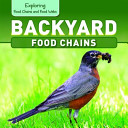
Angela's Royston's simpler Food Chains and Webs (Heinemann, 2014) for the lower ranges of the intended audience, and PowerKids' own 2002 "Library of Food Chains and Food Webs" for the upper, are better alternatives.

 A vibrant solo work from "Lumberjanes" (Boom!) cocreator.
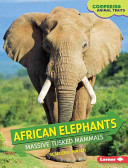
The unusual comparison of mammal traits makes this a series worth considering.
Each presentation covers appearance, habitat, skill, and traits for
its subject while also comparing and contrasting the focal animal
with other mammals by text, photos, and charts. Some comparisons
seem natural (similar-looking African elephants and white rhinos);
some surprisingly revealing (both sperm whales and vampire bats use
echolocation); some random, without relevant comparative features
(grizzly bears and titi monkeys). Reading list, websites. Bib.,
glos, ind. Review covers the following Comparing Animal Traits
titles: African Elephants, Gray Wolves, Grizzly
Bears, Humpback Whales, Mountain Gorillas,
Platypuses, Siberian Tigers, and Vampire BAts.

Skip them.
In this useful series, the orderly stages in working through a
middle-school research project are covered, with many examples to
clarify the process for beginners. From narrowing a topic, forming
a thesis, judging relevant and trustworthy sources, and
understanding advertising bias to avoiding plagiarism in writing
the final report, common student concerns are addressed. Reading
list, websites. Bib., glos., ind. Review covers the following Info
Wise titles: Analyze and Define the Assignment, Assess
and Select Your Sources, Identify and Evaluate
Advertising, Research and Synthesize Your Facts, and
Write and Revise Your Project.
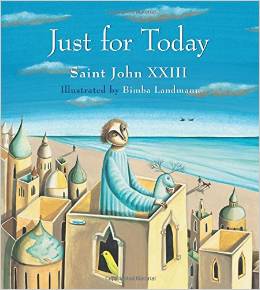
A potential read-aloud option for younger children in schools and libraries serving a religion-based curriculum.

Like Jenkins and Page's other works, this delightful purchase combines big, bold illustrations with intriguing science. A solid addition to the 590s.
![Howtoons: [Re]Ignition](https://s3.amazonaws.com/ArchiveImages/LegacyReviews/SLJ/9781632150561.jpg)

Visual and nonvisual learners alike will appreciate this series' approach.
Clear organization helps make fairly dense content accessible. Four
sections (e.g., "Milestones in Motion") begin with a pictorial
timeline of selected milestones, such as Newton's 1687 laws of
motion, followed by illustrated text that expounds on these
milestones. The selections are generally sound, though somewhat
limited, and the prose undistinguished. A suggested activity lacks
sufficient background. Reading list, websites. Bib., glos., ind.
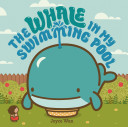
Though this tale is a bit formulaic, some droll touches, such as the shark in the neighbor's pool, keep it fun.
66,196 articles
ALREADY A SUBSCRIBER? LOG IN
We are currently offering this content for free. Sign up now to activate your personal profile, where you can save articles for future viewing
ALREADY A SUBSCRIBER? LOG IN
Thank you for visiting.
We’ve noticed you are using a private browser. To continue, please log in or create an account.