Research

Here at last! The numbers our readers have been waiting for—the list of average book prices for 2012 and 2013 to date—are finally available.
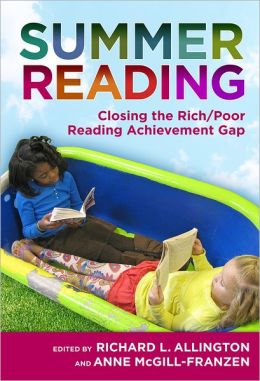
The significant decline in reading skills many students experience over the summer is no secret, but it’s particularly damaging for children in low-income neighborhoods. 'Summer Reading: Closing the Rich/Poor Reading Achievement Gap,' edited by Richard L. Allington and Anne McGill-Franzen, offers an in-depth look at this disparity and offers solutions that go beyond recommended reading lists.

What does a good school library look like? What role does a good school library play in educating New Jersey students? These are the questions Ross Todd, Ph.D., and Carol Gordon, Ph.D., co-directors of the Center for International Scholarship in School Libraries (CISSL), sought to define in a recent two-phase study they conducted in public elementary, middle, and high schools throughout the state. In an interview with SLJ,Todd and Gordon share some of their most surprising and illuminating findings, along with the steps they are taking to promote the research this year and their best practices recommendations for how other schools can build successful libraries.
Teenagers are revealing more about themselves on social media than ever before, but they’re also taking more steps to protect their privacy online, according to “Teens, Social Media, and Privacy,” a May 21 report issued by Pew Internet. The report also found Twitter use among teens—especially African Americans—is rising, while teens' fondness for Facebook is on the decline.
A recent national report from the Pew Research Center that stated that most parents consider libraries important for their children has attracted some criticism from the library community, which is concerned that the findings are based on a skewed sample and put too much emphasis on reading.

SLJ’s 2013 job satisfaction survey reveals widespread happiness among librarians, but challenges persist.
From The Canadian Press: A recent dust-up between Wikipedia and Canada’s largest university raises questions about how collaborative the popular website that bills itself as “the free encyclopedia that anyone can edit” truly is. The online information portal recently took a professor from the University of Toronto to task for one of his classroom assignments. [...]
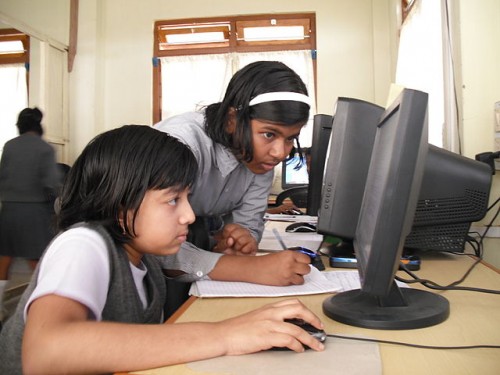
The task for educators is not to drain this sense of open-ended exploration from student-fans but rather to make sure that it is accompanied by the Jiminy Cricket-like voice of critical literacy...
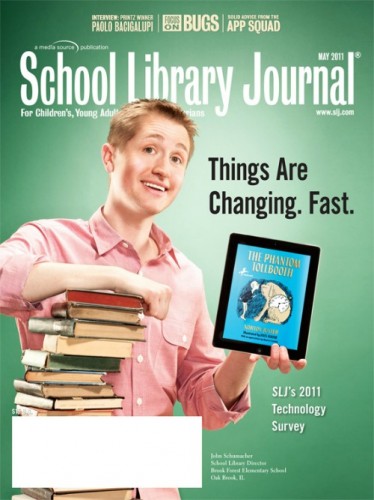
SLJ wants you... to complete our technology survey. And who knows? You might make our cover.
261 articles
ALREADY A SUBSCRIBER? LOG IN
We are currently offering this content for free. Sign up now to activate your personal profile, where you can save articles for future viewing
ALREADY A SUBSCRIBER? LOG IN
Thank you for visiting.
We’ve noticed you are using a private browser. To continue, please log in or create an account.