Opinion
Spurred by recent findings by the Cooperative Children’s Book Center, the topic of diversity (or rather, lack thereof) in children’s books has been receiving a lot of attention lately. The BBC has picked up on the topic and recently ran t...

SLJ has compiled an expansive page of diversity resources—including materials on people of color, non-American cultures, LGBTQ issues, and disability—to help librarians better serve children and teens. From author interviews to collection development tools and from blogs to news coverage, these articles and reviews aim to give insight into issues that are becoming more relevant for kids each day.

Being able to easily locate LGBTQ-friendly materials for children is an important task for librarians seeking to support their diverse reading communities. Kids must be given opportunities to explore literature from multiple points of view, yet it’s sometimes challenging to meet this need, especially for grades 3–5.

If the "Harry Potter" books opened up fantasy for generations of readers, what will be the "gateway drug" for nonfiction readers? The author considers Jonathan Hunt's question.
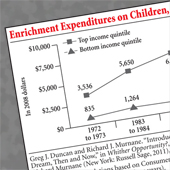
Recently, I’ve reconsidered that element of human experience called interest, thanks to Annie Murphy Paul and Mimi Ito. Murphy Paul is a journalist covering cognitive science and Ito, a cultural anthropologist, is a proponent of the Connected Learning concept, but their ideas both relate to the power of interest, and the impact on kids when it is fostered.

Should babies be exposed to apps? Rachel Payne responds to a comment on her "Are Learning Apps Good for Babies?" piece. Is removing a book from a required reading list a form of censorship? One reader questions the inclusion of Sherman Alexie'sThe Absolutely True Diary of a Part-Time Indian on a sixth-grade reading list.
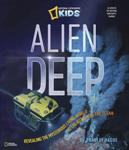
Animals with transparent guts! Fish that make their own light! An underwater bird? Booktalk audiences hungry for adventure and monsters can find both in remarkable books on marine mysteries. While the following titles are aimed at fourth grade and above, even younger readers will find the pictures irresistible.
Back in May I was excited to discover Voice Comments–a great tool for personally adding voice feedback to student writing or collaborative work. Recently, the app relaunched with a new interface and a bunch of impressive new features, as Kaizena. (In Japan, Kaizen refers to a philosophy of continuous improvement.) If Google Docs is a way of life at [...]

Coupled with the much-anticipated Google Play for Education store, the Nexus 7 bolsters Google’s growing claim to the K–12 tablet landscape.
1,944 articles
ALREADY A SUBSCRIBER? LOG IN
We are currently offering this content for free. Sign up now to activate your personal profile, where you can save articles for future viewing
ALREADY A SUBSCRIBER? LOG IN
Thank you for visiting.
We’ve noticed you are using a private browser. To continue, please log in or create an account.