Opinion

April is National Poetry Month and a favorite part of this initiative by the Academy of American Poets is Poem in Your Pocket Day, coming April 18. It's a perfect time to see poetry all around us and reinforce that poetry infuses our lives. How will you be celebrating?

Many people hold on to the belief that nonfiction writing is “just the facts,” often synonymous with formulaic, dull writing. Nothing could be further from the truth. Writers for young people model both substance and style, and can serve as mentors to their readers.

At one of the hottest sessions at ALA's most recent Midwinter meeting, the Dewey Decimal System—that sacred cow of library organization—was trotted out in front of a packed room and subjected to intense scrutiny. But in the midst of Common Core, among other pressing issues, is this debate really worth our time?
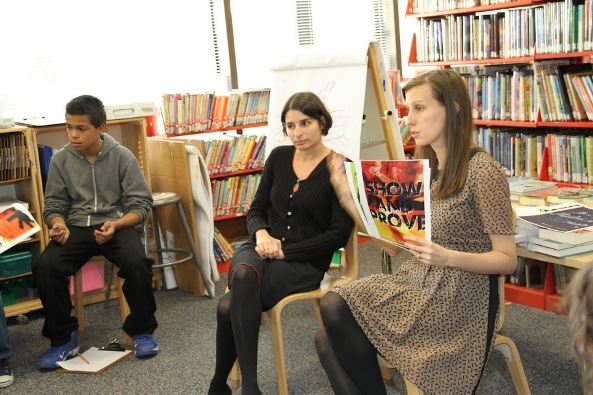
Students at the Bankstreet School discuss diversity and book covers with editors from Knopf; author Elizabeth Eulberg reunites with a fan at TEDXTeen.

How are New York's librarians doing when it comes to Common Core? Find out as SLJ columnist Marc Aronson talks to educators who are in the trenches.

As dwindling funds and looming budget cuts reach many of the nation’s public libraries, 12 institutions received $5,000 mini-grants to support programming in their diverse communities. ALSC recently gifted these Día Family Book Club Program awards to expand El día de los niños/El día de los libros (Día) into an ongoing yearlong celebration. The winning libraries give SLJ some insights into how they garnered the much-needed funds.

It’s spring, a time when students start looking for summer jobs or internships—and that requires some attention to their resumes and portfolios. In this month's "Cool Tools," Richard Byrne taps the best applications for creating an online showcase of your best work.

In a rebuttal to Roy Tennant's recent blog post, Paul Oh of the National Writing Project, maintains "that knowing HTML—even just knowing how to find the HTML on a webpage or knowing just a few of the tags that comprise the language—makes us increasingly Web literate and gives us critical knowledge in relation to the most important writing production engine of our lifetime, the Internet."

Knowing the research behind text complexity is critical to understanding the Common Core's call for more complexity, and how reading for pleasure fits in.
1,285 articles
ALREADY A SUBSCRIBER? LOG IN
We are currently offering this content for free. Sign up now to activate your personal profile, where you can save articles for future viewing
ALREADY A SUBSCRIBER? LOG IN
Thank you for visiting.
We’ve noticed you are using a private browser. To continue, please log in or create an account.