Nonfiction

 Losure has written a volume that both informs and excites. Highly recommended for middle school science biography sections.

A worthy purchase for all libraries, especially for schools.
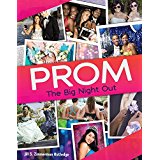
An entertaining and helpful bit of pop culture for students who crave prom all year round.

This latest volume in the series offers an engaging way to introduce volcanoes to middle graders who prefer a comic book format to more traditional nonfiction.
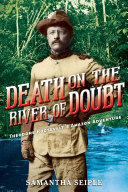
While this is an action-packed work of narrative nonfiction, its occasional stereotypical depiction of indigenous peoples lessens its value.

Browsable but ultimately unsatisfying. Consider only for collections in need of an overview of women's achievements.
 A must-have volume on James Meredith, the March Against Fear, and the evolution of Black Power for high school students.—Hilary Writt, Sullivan University, Lexington, KY
An edifying and timely exposition of James Meredith and the March Against Fear and their impact on U.S. history, past and present. Bausum’s clear language and smart use of archival photos and pull quotes document how Meredith’s single-man walk transformed into a larger endeavor to register and unify black voters and to alleviate the fear felt by African Americans living in a racist society (a notion that would later translate to the concept of Black Power). Readers become a part of the march as Bausum begins each chapter with the date, the distance traveled by the marchers, and their next destination. Evocative quotes from those supporting the march and those in opposition provide additional context on the sentiment felt by each side. The inclusion of racial epithets, curses, and horrific abuse emphasizes the reality of the time (an author’s note explains the decision not to alter the language of quotations). Bausum expertly encapsulates the overall theme of the march during a specific episode at the Philadelphia, MS, courthouse: “Dignity over anarchy. Justice over injustice. Love in answer to hate.” In the back matter, Bausum discusses her research, which included interviewing Meredith, and how civil rights remain a pertinent issue. VERDICT A must-have volume on James Meredith, the March Against Fear, and the evolution of Black Power for high school students.

Readers looking for help for themselves or a friend will find that this slim volume is chock-full of easy-to-implement ideas for those living with depression.
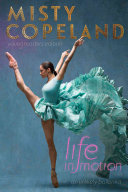
Copeland's story will interest, inform, and inspire budding ballerinas and deserves a place in every library that serves middle grade readers.—Magdalena Teske, Naperville Public Library, IL
Although Copeland didn’t begin her ballet training until the age of 13, she transcended the competition in just five years’ time and became a professional dancer at the American Ballet Theatre. Despite Copeland’s extraordinary natural talent, her dance career has not been an easy one. In this young readers edition of her 2014 autobiography, she relates her experiences growing up in a low-income, single-parent family and recounts the custody battle between her mother and her dance teacher. Copeland goes on to describe the challenges of her life as a professional ballerina, most notably her isolation as a black artist in a predominantly white field. She writes that “some people still notice [her] skin color before they notice [her] talent” and that others “simply don’t believe brown girls have a place in classical ballet.” While Copeland’s overall tone is conversational, her frank discussion of race is serious and relevant to tween readers. She expresses gratitude for her numerous friends and supporters and recalls her delight at certain opportunities and roles, such as her collaboration with Prince and her landmark performance as the Firebird in 2012. Copeland closes her book by saying that she wants young dancers to “look at what I’ve accomplished and realize they can achieve this dream, too.” VERDICT Copeland’s story will interest, inform, and inspire budding ballerinas and deserves a place in every library that serves middle grade readers.
6,996 articles
ALREADY A SUBSCRIBER? LOG IN
We are currently offering this content for free. Sign up now to activate your personal profile, where you can save articles for future viewing
ALREADY A SUBSCRIBER? LOG IN
Thank you for visiting.
We’ve noticed you are using a private browser. To continue, please log in or create an account.