Maker
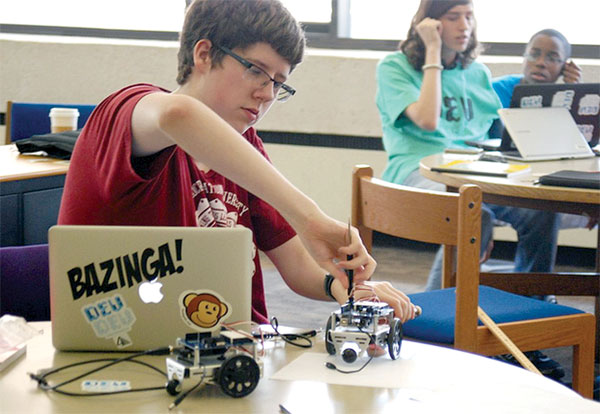
Computer coding programs and robotics are just some of the tools intrepid young patrons will be using this summer as school and public librarians nationwide gear up for technology camps.
Last night I attended the Special Spring Break Edition of TL News Night featuring some of the amazing men of libraryland: Andy Plemmons, Shannon Thompson Stacy Ford and Dhaivyd Hilgendorf. Sherry Gick and Nikki Robertson moderated. The conversation focused on student voice. And it was pretty darn special, with practical, engaging, inexpensive and sticky learning [...]
Put the "science" back in library science and help support STEM learning

"The EV3 is one of those toys that transcends consumerism and becomes a pathway into new kinds of hands-on production and learning for kids and adults alike," writes Chad Sansing in our review of LEGO's latest version of the popular Mindstorms robotics platform.
Nine-year-old Matthew is the owner of a brightly-colored prosthetic Robohand that was created in the MakerSpace of the Johnson County Library in Overland Park, KS.

Let’s be honest. Physical resources are in decline, and the transition to digital holdings will only accelerate. So what can we do with all that library space opened up by the decline of print? Consider the Unperfekthaus, a German model that encompasses maker spaces and much more.
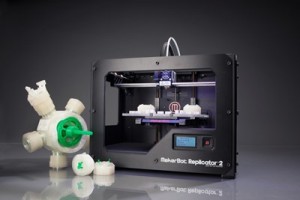
School librarians looking to launch a maker space in their schools, but who lack the funds to purchase high-tech gadgets like a 3-D printer, should consider the recent MakerBot and DonorsChoose.org partnership, says media specialist Andy Plemmons.
Make It @ Your Library, in collaboration with Instructables.com and the American Library Association, has finally launched its searchable website, makeitatyourlibrary.org, for librarians seeking maker space ideas and projects. Make It @ Your Library—an initiative developed through the ILEAD USA program over the past year—aims to help librarians realize maker projects in their own communities at low cost.
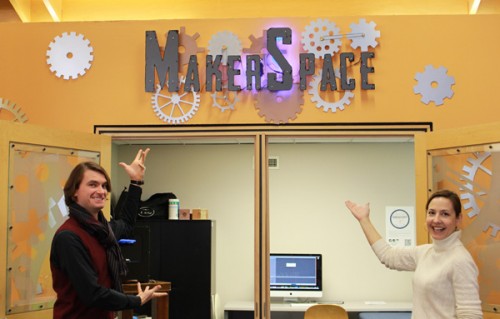
The most important resource for creating a successful library maker space—whether in a school or public library—is one’s own community, according to librarians Justin Hoenke, Amy Koester, and Michelle Cooper. Strong relationships and community involvement, not big budgets and high-tech gadgetry, are key to reaching children and teens, the trio of makers say.
321 articles
ALREADY A SUBSCRIBER? LOG IN
We are currently offering this content for free. Sign up now to activate your personal profile, where you can save articles for future viewing
ALREADY A SUBSCRIBER? LOG IN
Thank you for visiting.
We’ve noticed you are using a private browser. To continue, please log in or create an account.