Industry News
Watch a short film by a semifinalist in the National Coalition Against Censorship's 2012 Youth Free Expression Project Film Contest.
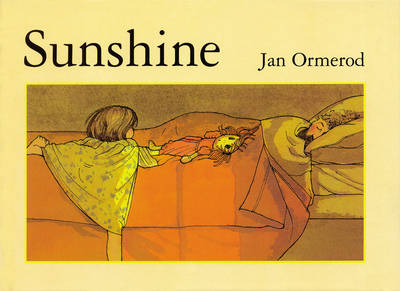
Jan Ormerod, author and illustrator of many books for young children, died Wednesday in England. Ormerod began her kid-lit career more than 30 years ago after the birth of her first child; previously she taught art and design. Her first book, Sunshine, won the 1982 Mother Goose Award for British kid lit and was named the Australian Picture Book of the Year and an ALA Notable Book.

School Library Journal’s fifth annual Battle of the Kids’ Books tournament, affectionately known as “BOB,” is about to begin! Modeled after college basketball’s March Madness, the tournament pits 16 of 2012’s best books for young people—everything from fantasy to nonfiction to wicked good romance—against one another in a winner-take-all online elimination contest kicking off on Monday, March 12.
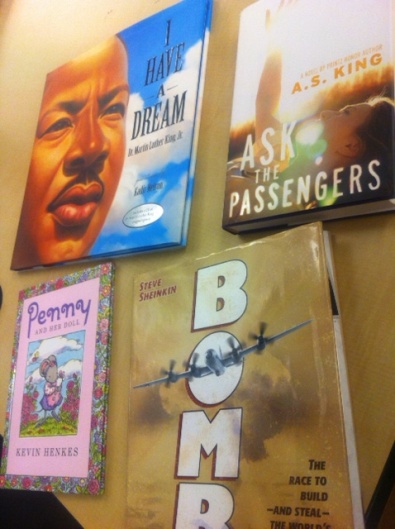
With the Youth Media Awards just a few days away, School Library Journal editors and contributors took a stab at naming some possible contenders.
Check out this week's News Bites for information on a business-related competition for students and teachers, minigrants offered to teachers and librarians by the Ezra Jack Keats Foundation, and the latest publishing news.

The American Library Association’s News Know-How initiative has selected the teen services department of the San Antonio Public Library to receive more than $50,000 to train and support kids in grades 10–12 in learning how to distinguish fact from opinion, check news and information sources, and distinguish between propaganda and news, the library announced this week.
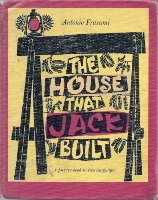
Antonio Frasconi, the award-winning illustrator best known for his woodcuts, died on January 8 at age 93. Among his notable contributions to children's literature are his bilingual picture books The House That Jack Built, a Caldecott Honor Book, and The Snow and the Sun, an ALA Notable Book.
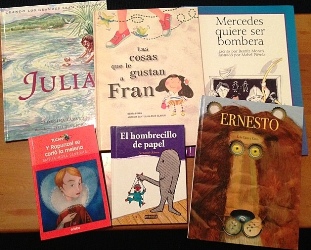
Librarians who serve children in predominantly Latino communities were shocked this past December to read a New York Times article claiming that there is a dearth of Latino characters in books written for young readers—a notion that is at odds with their own experiences. In fact, they tell School Library Journal, there is actually a wealth of resources currently available to these kids, and librarians have the power (and the responsibility) to make those meaningful connections.

If we build it well, a Digital Public Library of America (DPLA) can help school libraries meet the information needs of students even as local budgets shrink. The DPLA can provide important resources to the partnership between library-based and classroom-based teachers, especially during this period of rapid change in education, in libraries, in technology, and in the world of information generally.
4,103 articles
ALREADY A SUBSCRIBER? LOG IN
We are currently offering this content for free. Sign up now to activate your personal profile, where you can save articles for future viewing
ALREADY A SUBSCRIBER? LOG IN
Thank you for visiting.
We’ve noticed you are using a private browser. To continue, please log in or create an account.