Industry News

The books come by the hundreds almost daily. Boxes dropped off from yoga clubs, suburban book drives, and schools to be handed out at the Mighty Writers Street Libraries—pop-up libraries recently launched in Philadelphia to offer books to the city’s students and parents who watch as their access to titles diminish.

Since 1982, Banned Books Week has been an annual opportunity during the last week of September for librarians and other freedom fighters around the country to celebrate banned and challenged books, shine a spotlight on censorship, and honor those heroes working for open access to materials and the right to read for all. This year’s campaign is proceeding in some unique and wonderful ways. How are you marking the occasion?
The Institute of Museum and Library Services (IMLS) today announced grants for 42 library projects totaling $14,670,66. Recipients in 27 states and the District of Columbia received funding, including the American Library Association, which will research the efficacy of early literacy programs; Westport (CT) Library, which hopes to create a new model for maker spaces; and the Chicago Board of Education, which plans to improve school librarians' use of mobile technologies.

The Education Library Networks Coalition—which includes the American Library Association and the International Society for Technology in Education—is calling on the Federal Communications Commission to double the funding for E-rate, according to EdLiNC’s co-chair Jon Bernstein. The coalition also asks that the E-rate program offer more “scalable” goals for local entities, with limited national mandates.

“Penguin will resume doing business with OverDrive as of this morning,” Penguin spokesperson Erica Glass told LJ on September 25. According to a blog post by Karen Estrovich, collection development manager for OverDrive, 17,000 Penguin ebooks are already “live and available for purchase in OverDrive Marketplace.” Although Estrovich refers to the transaction as a purchase, the books are being offered for a one year term on a one copy/one user lending model.
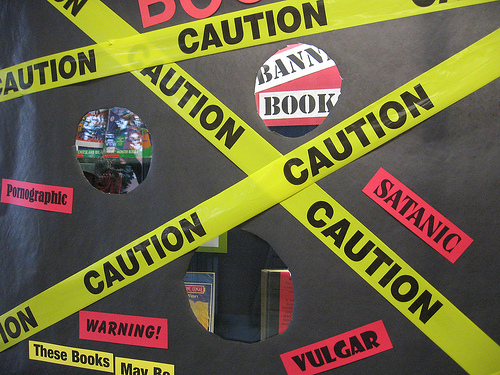
Fighting censorship and limited access to materials is an integral part of a librarian’s mission and job description. Launched in 1982, Banned Books Week is the national book community's annual celebration of the freedom to read. More than 11,300 books have been challenged since then. The following is a selection of SLJ’s news coverage of challenged books, interviews with oft-banned authors, and tools for showcasing censored titles during Banned Books Week, and all year.

YALSA and Dollar General Literacy Foundation are offering two $1,000 grants for Summer Reading programs: one for employing a teen intern and another for purchasing resources. The Library of Congress has launched a new Twitter feed for K–12 educators which can be found @TeachingLC. ALSC members are encouraged to send suggestions for the 2013 Theodor Geisel Award to the committee chair, Penny Peck. Capstone Interactive ebooks are now compatible with the Amazon Kindle Fire HD.
OverDrive has announced that more than 17,000 Penguin titles, both new and backlist, will now be available to OverDrive's U.S. library partners—public, college, and consortium—via the one copy/one user lending model. However, Kindle users will only be able to access Penguin books via “side-loading," rather than wireless loading.
Turnitin today announced that an eight-year efficacy analysis shows that high schools using the company’s plagiarism prevention technology are currently experiencing at least a 33 percent drop in unoriginal content in their students’ writing. The study analyzes more than 36 million student papers from 2,862 high schools.
4,052 articles
ALREADY A SUBSCRIBER? LOG IN
We are currently offering this content for free. Sign up now to activate your personal profile, where you can save articles for future viewing
ALREADY A SUBSCRIBER? LOG IN
Thank you for visiting.
We’ve noticed you are using a private browser. To continue, please log in or create an account.