



2018 School Spending Survey Report
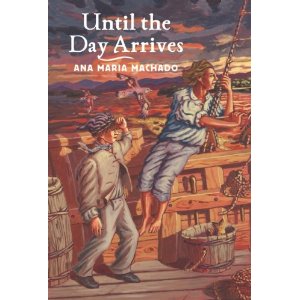
Until the Day Arrives
tr. from Portuguese by Jane Springer. 152p. House of Anansi/Groundwood. 2014. Tr $16.95. ISBN 9781554984558; ebk. $14.95. ISBN 9781554984572.
COPY ISBN
Early-seventeenth-century orphans Manu (Manuela, disguised
as a boy for safety) and "his" older brother Bento abandon their
Portuguese village for Lisbon. Bento is unjustly imprisoned and
sentenced to exile in Brazil; Manu accompanies him. Meanwhile,
African boy Odjidi and his family are sold into slavery in Brazil.
The fast-moving adventure and authentic glimpse of Brazil's early
settlers recommend this to young readers.
Early in the seventeenth century, young Manu and "his" older brother Bento, orphaned by the plague, abandon their decimated Portuguese village for Lisbon, where work in a tavern sustains them until Bento is unjustly imprisoned. Fortunately, Don Diogo and Dona Ines rescue Manu from a lean street life; their discovery that Manu is Manuela, disguised as a boy for safety, coincides with readers'. When Bento is sentenced to exile in Brazil, Manu accompanies him, and thanks to various benevolent Brazilians, including priests and an indigenous boy, the two siblings find new friends and skills: like their father, Manu works in clay, while Bento becomes not only a carpenter but a fine sculptor. Meanwhile, an African boy, Odjidi, and his family are captured, separated, and sold into slavery in Brazil. Both Bento and Manuela are troubled by slavery; an open ending suggests that their brave secret maneuverings will result in the reunion of Odjidi's family members and their escape to a quilombo (according to the glossary, a "settlement of runaway slaves in…colonial Brazil"). Machado's straightforward narrative conveys much about the social history of the period, some of it demonstrated by events (plausible, if remarkably fortunate); much of it simply explained. Though the translation can be jarringly colloquial, it's also engagingly lively. The fast-moving adventure and authentic glimpse of Brazil's early settlers will recommend this to young readers as well as to admirers of prolific Andersen Medal winner Machado. joanna rudge long
ALREADY A SUBSCRIBER? LOG IN
We are currently offering this content for free. Sign up now to activate your personal profile, where you can save articles for future viewing
ALREADY A SUBSCRIBER? LOG IN
Thank you for visiting.
We’ve noticed you are using a private browser. To continue, please log in or create an account.

Be the first reader to comment.
Comment Policy:
Comment should not be empty !!!