



2018 School Spending Survey Report
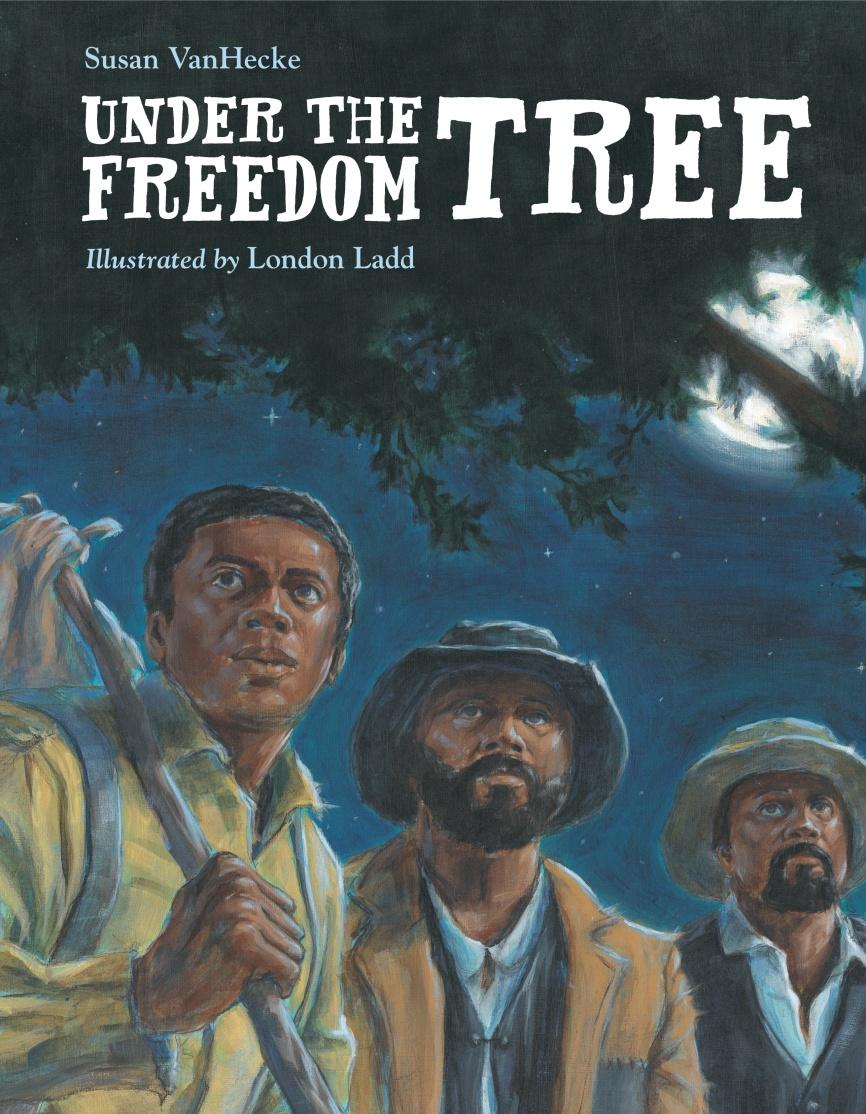
Under the Freedom Tree
illus. by London Ladd. 32p. bibliog. Charlesbridge. 2014. RTE $16.95. ISBN 9781580895507; ebk. $9.99. ISBN 9781607346340. LC 2012038698.
COPY ISBN
In 1861, when a Union general refused to return three escaped slaves to their owners, he set off a little-known episode in American history in which more than nine hundred slaves ended up in Hampton, Virginia, working for the Union army. The brief, spare verse is accompanied by realistic acrylic paintings depicting everyday life as the growing community builds a new town. Bib.
Covering a period from 1861 to 1863, this illuminating book is based on a little-known historical event and the brave men who deserve to be remembered for their role in establishing a haven for escaped slaves. Elegant verse captures vivid details, such as what the men may have seen and felt as they fled: “Glinting waves / slap rotting wood. / Whispers, / low and shivery. / ‘What if we’re caught?’/ Shackles. / The whip. / Sold downriver. / Or worse.” London Ladd’s beautiful, atmospheric illustrations showcase deep blues during the slaves’ dramatic nighttime escape, greens of lush foliage, and the earthy reds and browns of towns being constructed from rubble. A comprehensive author’s note provides context and information for events in the book, including a mention of Mary Smith Peake, a free black woman who taught under the Emancipation Oak. These lessons are considered the first classes at what became Hampton University, a historically black college.
In 1861, when Union General Benjamin Butler refused to return three escaped slaves to their owners, calling them "contraband of war," he set off a little-known episode in history in which more than nine hundred slaves ended up in Hampton, Virginia, working for the Union army. They were one step closer to freedom, though they were far from free. Eventually, schools were set up in Slabtown and Grand Contraband Camp, and these early schools led to the founding of Hampton University. Told in a spare, poetic voice, this story is filled with bravery, luck, and timing. If the initial three men had escaped any earlier, the Union officer would have been bound by the Fugitive Slave Act, but with the secession of Virginia, he argued that the law no longer applied. Realistic acrylic paintings depict the everyday life of the "enemy property," as the growing community builds a new town near the old oak tree that serves as shade for the school and place of joy to celebrate the Emancipation Proclamation. The lengthy author's note fills in the details left out by the brief verse, making this one a story to read more than once. Slavery is a challenging topic to introduce to young readers, but they have to start somewhere. This, along with Shane Evans's Underground (rev. 1/11), is a terrific place to begin. Bibliography included. robin l. smith
ALREADY A SUBSCRIBER? LOG IN
We are currently offering this content for free. Sign up now to activate your personal profile, where you can save articles for future viewing
ALREADY A SUBSCRIBER? LOG IN
Thank you for visiting.
We’ve noticed you are using a private browser. To continue, please log in or create an account.

Be the first reader to comment.
Comment Policy:
Comment should not be empty !!!