
FICTION

Treasury of Egyptian Mythology: Classic Stories of Gods, Goddesses, Monsters & Mortals

illus. by Christina Balit. 192p. bibliog. chron. further reading. index. maps. photos. reprods. websites. National Geographic. 2013. Tr $24.95. ISBN 9781426313806.
COPY ISBN
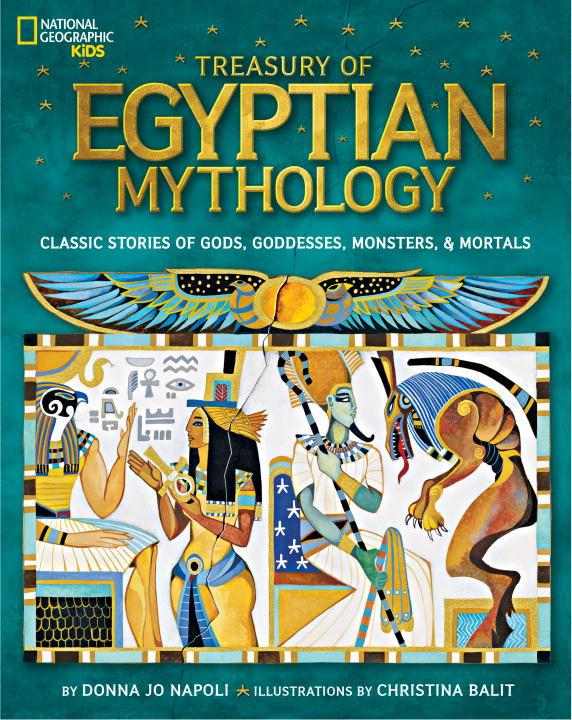
Gr 5 Up—Ra spits on the ground and a goddess springs forth. A devoted wife holds a flower so her husband may inhale the scent and a baby appears among the petals. A woman mourns and fertile farmland turns to dust. Prolific storyteller Napoli brings the ancient Egyptian gods to life for modern readers—their jealousies, passions, and grief are the driving forces in tales that explain creation, the seasons, the afterlife, and natural phenomena. Napoli's tone is swaying and intimate, earthy and incantatory, as if she were spinning tales aloud. "In the beginning…ah, many stories open that way." Sentences are fragmented, phrases are repeated, and wonderfully descriptive images are drawn from the physical world: tinkling jewelry, "thorns of anger," hot winds carrying grinding sand. Balit's glowing illustrations combine the flat, frontal style of ancient tomb paintings with flowing, graceful shapes. Curiously, the artist has chosen a very light skin tone for most of the Egyptians—both divine and human-in her paintings, with no explanation offered. Text pages are adorned with patterned borders, textured margins, and scattered stylized stars in gold. These effects, combined with stiff paper and a color palette drawn from semiprecious stones and metals, lend the book a weighty, sacramental quality. A lyrical retelling of the braided, interwoven, sometimes contradictory stories from the land of the Sphinx.—Paula Willey, Baltimore County Public Library, Towson, MD
Napoli brings a storyteller's art and a scholar's diligence to the myriad deities of ancient Egypt. Skillfully structuring her narrative from early creation stories to the Third Dynasty's Imhotep, she weaves a well-chosen sample of myths into a disarmingly informal narrative. Illustrator Balit gathers ancient Egyptian forms and motifs into dynamic compositions. Beautiful and indispensable. Reading list, timeline, websites. Bib., ind.

Be the first reader to comment.

Comment Policy:
  • Be respectful, and do not attack the author, people mentioned in the article, or other commenters. Take on the idea, not the messenger.
  • Don't use obscene, profane, or vulgar language.
  • Stay on point. Comments that stray from the topic at hand may be deleted.
  • Comments may be republished in print, online, or other forms of media.
  • If you see something objectionable, please let us know. Once a comment has been flagged, a staff member will investigate.


RELATED 

ALREADY A SUBSCRIBER?

We are currently offering this content for free. Sign up now to activate your personal profile, where you can save articles for future viewing

ALREADY A SUBSCRIBER?