
FICTION

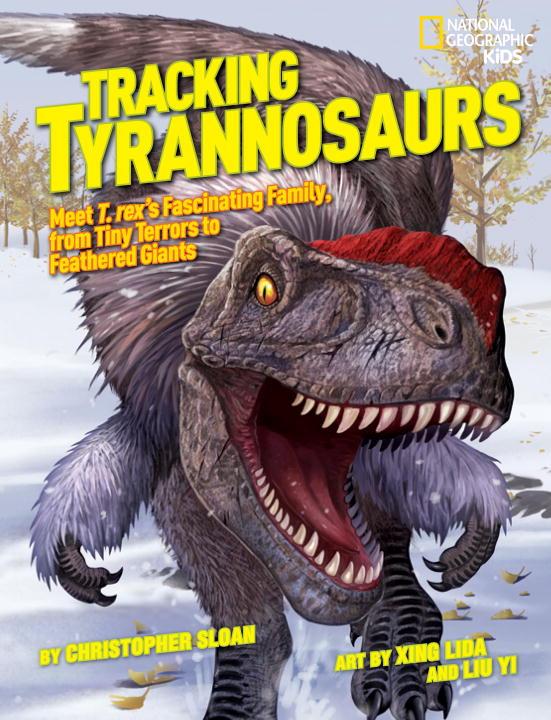
Tracking Tyrannosaurs: Meet T. rex's Fascinating Family, from Tiny Terrors to Feathered Giants

illus. by Xing Lida. 48p. diag. further reading. glossary. index. maps. photos. websites. National Geographic. 2013. Tr $18.95. ISBN 9781426313745.
COPY ISBN
Gr 5–7—Having a rock star like T. rex in one's family tree pretty much ensures that other tyrannosaurids will find themselves languishing in the wings like amp-toting roadies, but Sloan's new genealogical work certainly pops the spotlight on some nifty critters. The readable text investigates the evolutionary path of this predatory family, providing both a general "Dinosaur Family Tree" as well as a more specific "Tyrannosaur Family Tree"—from the Jurassic through the Cretaceous—to that final line in the rock above which no dino fossils have been found. From that point, Sloan delves into particular "branches." A global location map (including continental-drift insets) is provided, and some nine species are given facing-page units. These are graced with information boxes, size comparisons, a "Dino Database," and, more importantly, a clear presentation of what is known about that dinosaur, including its discovery and physical attributes, and what its existence means on the evolutionary tree. Included are such "new" finds as agile little Guanlong and the 30-foot-long Yutyrannus, surprisingly covered in "long, thick, hairlike feathers." All this is accompanied by some eye-catching, realistic artwork—informative in its own right. Slim, readable, informative, and with a feathery, toothy Yutyrannus clomping through a snowy landscape on the cover, this title will spend a good part of its life out in circulation.—Patricia Manning, formerly at Eastchester Public Library, NY
Sloan brings us the latest science on tyrannosauroid species, reflecting knowledge gained from recent fossil finds in Asia and North America. He explains these updates, which include reclassifications of the order and clues to their geographic origins, then profiles several of the newer species in field-guide style. The accessible text is accompanied by colorful yet scientifically grounded artistic renditions of the animals in action.

Be the first reader to comment.

Comment Policy:
  • Be respectful, and do not attack the author, people mentioned in the article, or other commenters. Take on the idea, not the messenger.
  • Don't use obscene, profane, or vulgar language.
  • Stay on point. Comments that stray from the topic at hand may be deleted.
  • Comments may be republished in print, online, or other forms of media.
  • If you see something objectionable, please let us know. Once a comment has been flagged, a staff member will investigate.


RELATED 

ALREADY A SUBSCRIBER?

We are currently offering this content for free. Sign up now to activate your personal profile, where you can save articles for future viewing

ALREADY A SUBSCRIBER?