
FICTION

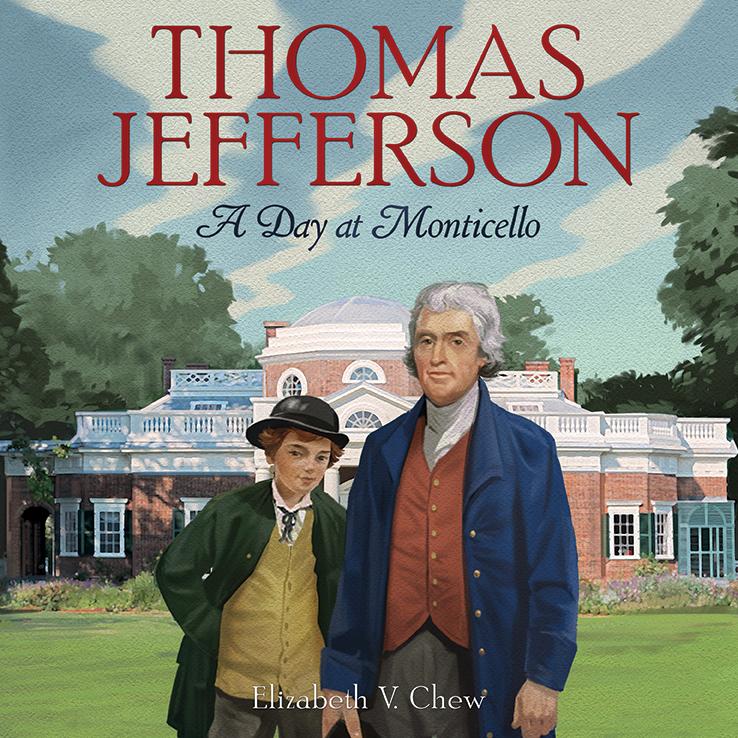
Thomas Jefferson: A Day at Monticello

illus. by Mark Elliott. 56p. Abrams. 2014. Tr $18.95. ISBN 9781419705410. LC 2012010023.
COPY ISBN
Gr 5–8—After finishing this beautifully illustrated book, also stocked with abundant photographs of artifacts housed at Monticello, readers will be left more curious than ever about the life and accomplishments of Thomas Jefferson. This is not to say that the book does not cover many of the most interesting aspects of his life and his idiosyncrasies; indeed, it certainly does that. Instead, it tells just enough about Jefferson so that anyone, young or old, might be enticed to learn even more. Readers will feel as though they are spending the day alongside him, watching his every move. Jefferson's meticulous habits, such as recording the weather conditions and temperature several times a day and daily letter writing before breakfast, give young people a flavor for the kind of detail-oriented man he was. Theye get the sense that he never stopped thinking of ways to improve everyday life, whether through the inventions he was always designing or the deep intelligence he demonstrated in his approach to solving problems. By following him around Monticello for a day, children only get a brief glimpse of his role as president, but it's enough to whet anyone's appetite to seek more. Though the author may have taken a few liberties in representing casual conversations Jefferson might have had with other people in his daily life, the facts about his life are well documented. This would be a splendid addition to any study of the early 1800s in the United States.—Maggie Chase, Boise State University, ID
Published in association with The Thomas Jefferson Foundation. A former curator at Thomas Jefferson's Monticello takes readers on a tour of the historical museum through a fictionalized one-day account of how the third U.S. president spent his time. An easy-flowing but often idealized present-tense narrative is accompanied by a combination of photographs, archival images, and Elliott's static illustrations. Slavery is lightly addressed through a series of sidebars. Timeline. Bib., ind.

Be the first reader to comment.

Comment Policy:
  • Be respectful, and do not attack the author, people mentioned in the article, or other commenters. Take on the idea, not the messenger.
  • Don't use obscene, profane, or vulgar language.
  • Stay on point. Comments that stray from the topic at hand may be deleted.
  • Comments may be republished in print, online, or other forms of media.
  • If you see something objectionable, please let us know. Once a comment has been flagged, a staff member will investigate.


RELATED 

ALREADY A SUBSCRIBER?

We are currently offering this content for free. Sign up now to activate your personal profile, where you can save articles for future viewing

ALREADY A SUBSCRIBER?