



2018 School Spending Survey Report
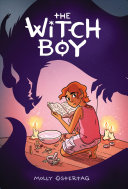
The Witch Boy
illus. by Molly Ostertag. 224p. Scholastic/Graphix. Nov. 2017. Tr $24.99. ISBN 9781338089523; pap. $12.99. ISBN 9781338089516.
COPY ISBN
 Gr 4–7—Aster belongs to a magical family, but he is having problems with one of the most basic rules: shapeshifting is for boys, while witchcraft is for girls. Aster is fascinated by the spells that the girls are learning, so he spies on their lessons whenever he can. When several boys disappear during shapeshifting practice, Aster realizes that he can help save them using witchcraft to battle a strange and powerful enemy—but he'll have to break his family's traditions and risk his life. Both the plot and the overall message are straightforward and familiar but engaging. Beneath the fantastical elements lies a story about upending gender expectations, forging identity, and uncovering heroic potential in oneself. Those who enjoy sci-fi or fantasy stories about protagonists who must prove that their society's rules are flawed will appreciate this offering. Ostertag's bright, gentle, cartoonlike artwork brims with life and adds extra appeal to this fast-moving story.
VERDICT An excellent choice for reluctant readers, fans of fantasy, and those looking for books that explore gender roles.—Andrea Lipinski, New York Public Library
Boys are shapeshifters and girls are witches--or so everyone keeps telling Aster, who has been studying spells in secret while pressure builds for him to conform to the norms of his magical community. According to legend, the last time a man bucked tradition and used witchcraft, it backfired, and the culprit--Aster's great-uncle Mikasi--turned monstrous before disappearing. When some of the clan's adolescent boys go missing in the forest that separates the enchanted community from the "regular" world, Aster and his new non-magic friend Charlotte (called Charlie) learn that Mikasi is behind the disappearances. Together they save the clan and persuade the community to rethink its strict adherence to gender roles. (Aster's grandmother says of her brother, "I regret what we did to Mikasi every day. It was not his magic that was wrong, but what we denied him.") This graphic novel's clear panel outlines, subdued hues, and balanced paneled layouts allow the story and page-turns to progress at a steady pace. Various typefaces highlight different characters' voices and personalities, and word balloons weave in and out of panels seamlessly, allowing extended moments of exposition to flow atop context presented visually. Close-up perspectives reveal characters' facial expressions and feelings not explicitly stated in the dialogue, and an invented magical language is represented by symbols within word balloons. (Note that Ostertag's culturally ambiguous world includes traditions resembling Native American vision quests, making for a fuzzy distinction between fantasy and exoticized reality.) elisa gall
ALREADY A SUBSCRIBER? LOG IN
We are currently offering this content for free. Sign up now to activate your personal profile, where you can save articles for future viewing
ALREADY A SUBSCRIBER? LOG IN
Thank you for visiting.
We’ve noticed you are using a private browser. To continue, please log in or create an account.

Be the first reader to comment.
Comment Policy:
Comment should not be empty !!!