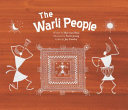
Gr 3–5—A startling first sentence cements the Warli in the past: "In about the 10th century BCE, in western India, there lived a group of people called the Warlis." (Most historians say that the tribe can be traced back to that time, with their art employing a perhaps 5,000-year-old style, and resembling some rock paintings that might have been done earlier elsewhere.) The text simply and eloquently depicts their civilization as one revolving around farm life; confusingly, the back matter notes the tribe's move from hunting/gathering to agriculture, circa 2500 BCE. The text omits all mention of religion, societal or political organization, the female artists' use of rice-paste paint, or the artwork's preservation. With the exception of the back cover, the Warli are referred to entirely in the past tense, as if they were ancient history, although almost a million are alive today, some still making art. Alas, none of the engaging images in the book are actually Warli paintings. The illustrations are "modeled after" Warli works. In other words, the lively images, which closely copy Warli style, are especially egregious as the Warli are trying to preserve their cultural intellectual property.
VERDICT Appealing, almost lyrical, text is marred by a lack of context and questionable art.
Be the first reader to comment.
Comment Policy:
Comment should not be empty !!!