
FICTION

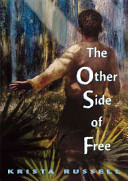
The Other Side of Free

256p. Peachtree. 2013. Tr $16.95. ISBN 9781561457106. LC 2012050989.
COPY ISBN
Gr 4–6—A stern, exacting woman named Phaedra fosters 13-year-old Jem in Fort Mose, a Spanish enclave for escaped slaves in 18th- century Florida. In exchange for the protection of the Spanish government, the adult inhabitants of Fort Mose pledge to abandon traditional modes of belief and convert to Catholicism. The men must also join a militia to defend the neighboring settlement against the English. Their military commitment takes on terrifying import following the 1739 Stono slave rebellion. Exasperatingly positioned between childhood and maturity, Jem aches to evade Phaedra's belittling supervision and take up arms, but he fails to prove his intelligence and trustworthiness to the community leaders. Russell layers period and cultural details with a historian's enthusiasm, populating the story with Native American communities, Spanish colonists, Fort Mose refugees, and a French trader. Mining such rich and little-known material offers inherent value to library shelves and school curricula but Russell possibly attempts to pack too much into one book, including several minor mysteries and Jem's devoted rearing of a injured owlet. Though the characterization of Jem wobbles according to the dictates of subplots, the secondary figures retain more solidity; Phaedra in particular evinces an acerbic charm. When the British lay siege to the Spanish holdings, Russell successfully elevates the tension and sheds light on this fascinating moment in history. Readers will be immersed in the suspenseful intrigue and Jem's battle for freedom.—Robbin E. Friedman, Chappaqua Library, NY
In late-eighteenth-century Spanish Florida, colonial slaves who will help fight the English are promised freedom. Longing to join the militia, thirteen-year-old Jem resents his caregiver, sharp-tongued Phaedra, who helped enable his escape but now babies him. Some of the subplots are neglected, but the relationship between Jem and Phaedra is believable and the unique historical setting is nicely drawn. Bib.

Be the first reader to comment.

Comment Policy:
  • Be respectful, and do not attack the author, people mentioned in the article, or other commenters. Take on the idea, not the messenger.
  • Don't use obscene, profane, or vulgar language.
  • Stay on point. Comments that stray from the topic at hand may be deleted.
  • Comments may be republished in print, online, or other forms of media.
  • If you see something objectionable, please let us know. Once a comment has been flagged, a staff member will investigate.


RELATED 

ALREADY A SUBSCRIBER?

We are currently offering this content for free. Sign up now to activate your personal profile, where you can save articles for future viewing

ALREADY A SUBSCRIBER?