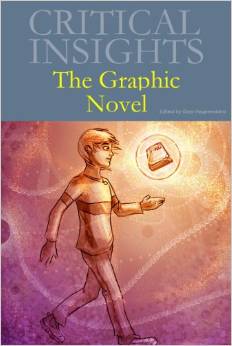
Gr 10 Up—Crediting comics legend Will Eisner for coining the phrase "graphic novel" more than 30 years ago, this well-organized collection of essays looks at the prehistory of the genre as well as the contemporary scene. The volume begins with lengthy essays on four different subgenres: the superhero narrative, the horror narrative, the crime narrative, and the reality/fantasy narrative. Separately authored, these treatments offer a historical evolution of the genre and typical characteristics of each. The crime narrative, for example, covers the debut of the
Dick Tracy comic strip in 1931, which may have been influenced by real-life prohibition gangsters Al Capone and Charles Luciano, whereas newer works are explained as being a blend of crime, horror, and noir, as in
The Road to Perdition. The next section critiques 10 graphic novels, including
Maus: A Survivor's Tale, Watchmen, Batman, Persepolis, Sandman, The Walking Dead, and more. Each contributor devotes 10 or more pages to each essay, and only a few are divided into accessible sub-sections for themes, criticism, awards, or summary. In general, the discussion focuses on literary elements, such as themes, characterization, allusion, symbolism, and archetypes of comic book superheroes, but the work is sophisticated enough to render it most appropriate for advanced secondary students and undergraduates. All entries are followed by a list of works cited, and a larger bibliography of resources in the various genres is appended. A general index will guide users to characters, titles, and many other comic references, and the title comes with ebook permission.—
Vicki Reutter, State University of New York at Cortland





Be the first reader to comment.
Comment Policy:
Comment should not be empty !!!