Ernst has updated and revised two of her older works:
Lapsit Services for the Very Young (1995) and
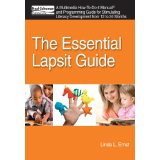
Lapsit Services for the Very Young II (2000, both Neal-Schuman) into this new resource. This is meant as a guide for youth librarians new to the field of early childhood programming, although it also stands as a solid refresher for those more experienced librarians who might have missed hearing about the latest research and developments in early learning and early childhood brain development. This new version is well organized and flows well. Ernst starts with offering a brief yet informative look at the facts of early learning and what we have learned recently via advances in research—such as the fact that "children's brains develop over time, with certain areas of the brain developing at different times and at different paces" or "at three years of age, the child has about twice as many connections in the brain as an adult does." She addresses the topics of in-library programming and outreach, as well as reaching out to special needs audiences and the adaptations that might make a traditional lapsit program more comfortable for children and their caregivers within that audience range. The book contains five chapters, and is broken into a section of "program foundations" and then the more practical section of "program building blocks" which lays out, step-by-step, what the staff member needs in order to put together a successful lapsit program. Included is advice on age breakdowns, whether to make the program registered or not, how to handle attendance issues, and proper pacing for a successful lapsit program. Chapter four is the bread and butter of the manual, offering sample programs, books that work in programs, thematic lists of ideas, and nursery rhymes. Some of the rhymes contain a video symbol; these selections are available as online videos at alaeditions.org/webextras. They feature the author performing the rhyme or fingerplay. Ernst is generous with her information, including bibliographies of additional readings and materials at the end of each chapter. A healthy appendix is filled with handouts and templates that are also available online for folks to customize and print out.
VERDICT This is a necessary resource with a wealth of updated information and resources for public libraries to have available for staff use and training in the field of early literacy.





Be the first reader to comment.
Comment Policy:
Comment should not be empty !!!