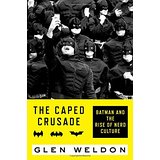
By studying Batman's fan base over the superhero's 80-year history, Weldon, a devotee himself, arrives at an interesting theory: the Batman brand exploded when marketers figured out how to appeal to both "nerds" and "normals." The key to Batman's survival has been his mutability. First appearing in 1939, he appealed to boys. A decade later, the censorship of comics pushed Batman underground, where he was picked up by rebellious teens; by the 1960s, pop culture, spearheaded by fan Andy Warhol, had transformed him into campy fare. These boys, teens, and men took from Batman's iconography their own definitions of what it meant to be male, and to be a hero, in distinctly changing times. (Female admirers are few, although Weldon does include them when he can.) Batman's competing identities threatened his future as a character and an industry. Over the last five decades, young artists from three media—print, TV, and film—achieved a synthesis of Batman iterations while reestablishing his core persona as a childhood survivor of violence who swears to avenge his parents' death by fighting crime. Comics began to reference the pointy ears and slick capes of the first comics, and nerd culture was born. Today Batman is grim but not nihilistic, obsessed but not crazy, and as a hero, he resonates. Weldon puts all this together in an analysis enhanced by beautiful color plates of Batman comics dating back to the hero's inaugural year.
VERDICT A must for comics fans who will be first in line for a go at this dense but readable text.
Be the first reader to comment.
Comment Policy:
Comment should not be empty !!!