



2018 School Spending Survey Report
Sugar Hill: Harlem's Historic Neighborhood
illus. by R. Gregory Christie. 32p. Albert Whitman. Feb. 2014. Tr $16.99. ISBN 9780807576502.
COPY ISBN
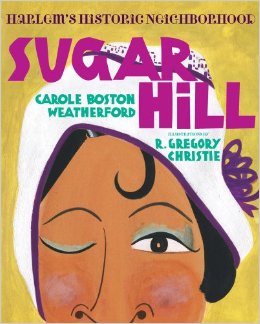
"Sugar Hill, Sugar Hill where life is sweet" repeats throughout this rhymed tribute to Harlem's storied neighborhood, home of many well-to-do African Americans during the Harlem Renaissance, including Paul Robeson, Lena Horne, Thurgood Marshall, and W. E. B. Du Bois. Christie's pastel-hued illustrations and Weatherford's poetry give a strong sense of vibrant simultaneous action, and neither slides into nostalgia.
"Sugar Hill, Sugar Hill where life is sweet" repeats throughout this rhymed tribute to Harlem's storied neighborhood, the home of many well-to-do African Americans in the first half of the twentieth century. Although we are told about the "doctors and lawyers [who] live next door / to the owners of a corner store," most of the book focuses on some of Sugar Hill's most famous residents, particularly those who lived there during the Harlem Renaissance, such as Paul Robeson, Aaron Douglas, Lena Horne, Thurgood Marshall, and W.E.B. Du Bois. We also see Faith Ringgold as a child, with a visual reference to Tar Beach that many children will recognize. Some of Christie's pastel-hued illustrations show us street views of the neighborhood and, through windows, offer glimpses into people's lives (e.g., one picture shows Count Basie and Duke Ellington making music together while across the street we see Zora Neale Hurston working at her typewriter). The paintings and Weatherford's poetry give a strong sense of vibrant simultaneous action, and neither slides into nostalgia. An author's note provides some additional background on Sugar Hill, as well as a few lines about each of the famous people mentioned in the book. kathleen t. horning
ALREADY A SUBSCRIBER? LOG IN
We are currently offering this content for free. Sign up now to activate your personal profile, where you can save articles for future viewing
ALREADY A SUBSCRIBER? LOG IN
Thank you for visiting.
We’ve noticed you are using a private browser. To continue, please log in or create an account.

Be the first reader to comment.
Comment Policy:
Comment should not be empty !!!