



2018 School Spending Survey Report
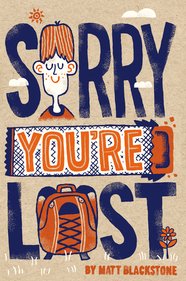
Sorry You're Lost
320p. ebook available. Farrar. 2014. Tr $15.99. ISBN 9780374380656.
COPY ISBN
Ever since his mother died, seventh grader Denny "Donuts" Murphy has felt alone and small. So he intentionally develops a big persona, making everything into a joke. With the help of friends and a budding romance, Donuts sheds his manic showman exterior. The first-person narrative is a perfect vehicle to reveal Donuts's inner self in this story of substance and hope.
Ever since his mother died, seventh grader Denny "Donuts" Murphy has felt alone and small, "small as the ants on the classroom floor nibbling on a stray piece of mozzarella cheese." So he intentionally develops a big persona: clowning in the classroom, making everything into a joke, doing robot dances and "surfing" on a desk (before falling into the trash can). But inside, Donuts is hurting, often pulling out his cell phone to call his mother, if only to make him feel that she's with him for a moment. Donuts's grieving father is barely coping, and Donuts feels as if he's also lost him. "Sorry you're lost," Donuts says. "I'm lost, too." But, gradually, with the help of friends and a budding romance, Donuts sheds his manic showman exterior and learns to appreciate the good of the world. The first-person narrative is a perfect vehicle to reveal Donuts's inner self, and what might have been just a series of clichéd middle-school antics turns out to be a story of substance and hope. dean schneider
ALREADY A SUBSCRIBER? LOG IN
We are currently offering this content for free. Sign up now to activate your personal profile, where you can save articles for future viewing
ALREADY A SUBSCRIBER? LOG IN
Thank you for visiting.
We’ve noticed you are using a private browser. To continue, please log in or create an account.

Be the first reader to comment.
Comment Policy:
Comment should not be empty !!!