
Gr 4–7—In these slim graphic memoirs, young adults share their stories and attempt to cover serious issues. In
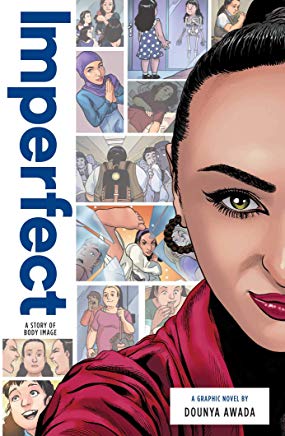
Imperfect, Dounya Awada, a 24-year-old Muslim woman, describes how she turned to food for comfort as a child after an aunt said she was "too big." She gains weight and is bullied as a teenager, but after losing weight, she is still ostracized, and her body dysmorphia and food obsession turn into bulimia, nearly leading to her death. In
Colorblind, Jonathan Harris, an African American teen, introduces readers to his family and recalls what his uncle, who is in prison, taught him about cultural appreciation and seeing beyond differences in skin color. A racist SWAT team traumatizes young Jonathan and his family while using excessive force during an unnecessary parole sweep. Jonathan then joins a soccer league and endures racial slurs from players on the other teams, but he eventually connects with one of those athletes to pass along his uncle's lessons. Both titles are heavy-handed and lack nuance. The metaphor of color-blindness as the cure for racism is outdated, and Jonathan's statement that he and the other player "both know what it was like to be oppressed" (the other athlete is Irish) is oversimplified. The illustrations in Dounya's story are rife with fat-shaming and depict her becoming thin, prior to developing bulimia, over the course of a couple of pages, sending the message that extreme weight loss is healthy, easy, and desirable.
VERDICT Though well intentioned, these graphic narratives miss the mark.
Be the first reader to comment.
Comment Policy:
Comment should not be empty !!!