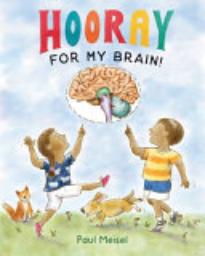

Gr 1-3–Setting out to show how our “great brains” are the “bosses of our whole bodies,” Meisel maps out the organ’s regions and parts in a mix of anatomical closeups and cutaway views of members of an active family (with olive skin). In line with his relatively simple visual style Meisel explains brain functions in plain language—but he also digs gratifyingly deeply into the lexicon of scientific terms, so that readers will come away not only able to, for example, link sight to the “occipital lobe” and body temperature to the “hypothalamus,” but at least be aware that feeding any freshly sparked curiosity about the many roles hormones play in nutrition, responses to pain, or how babies are made should start by seeking out further information about the “pituitary gland.” His attempt to describe how nerves work, with its too-sketchy definition of “synapse” as “where neurons talk to each other,” and unpacked representations in the accompanying diagram captioned “axon terminals” and “terminal boutons,” may leave younger readers more bewildered than enlightened. Still, the message that our brains merit a cheer for controlling everything we do from kicking a ball to chowing down on tacos, from breathing to learning, comes through loud and clear.
VERDICT A buoyant shout out to our body’s most important organ (though look what’s telling us that)—rewarding reading for all lower grade children with a serious interest in their own anatomy.
Be the first reader to comment.
Comment Policy:
Comment should not be empty !!!