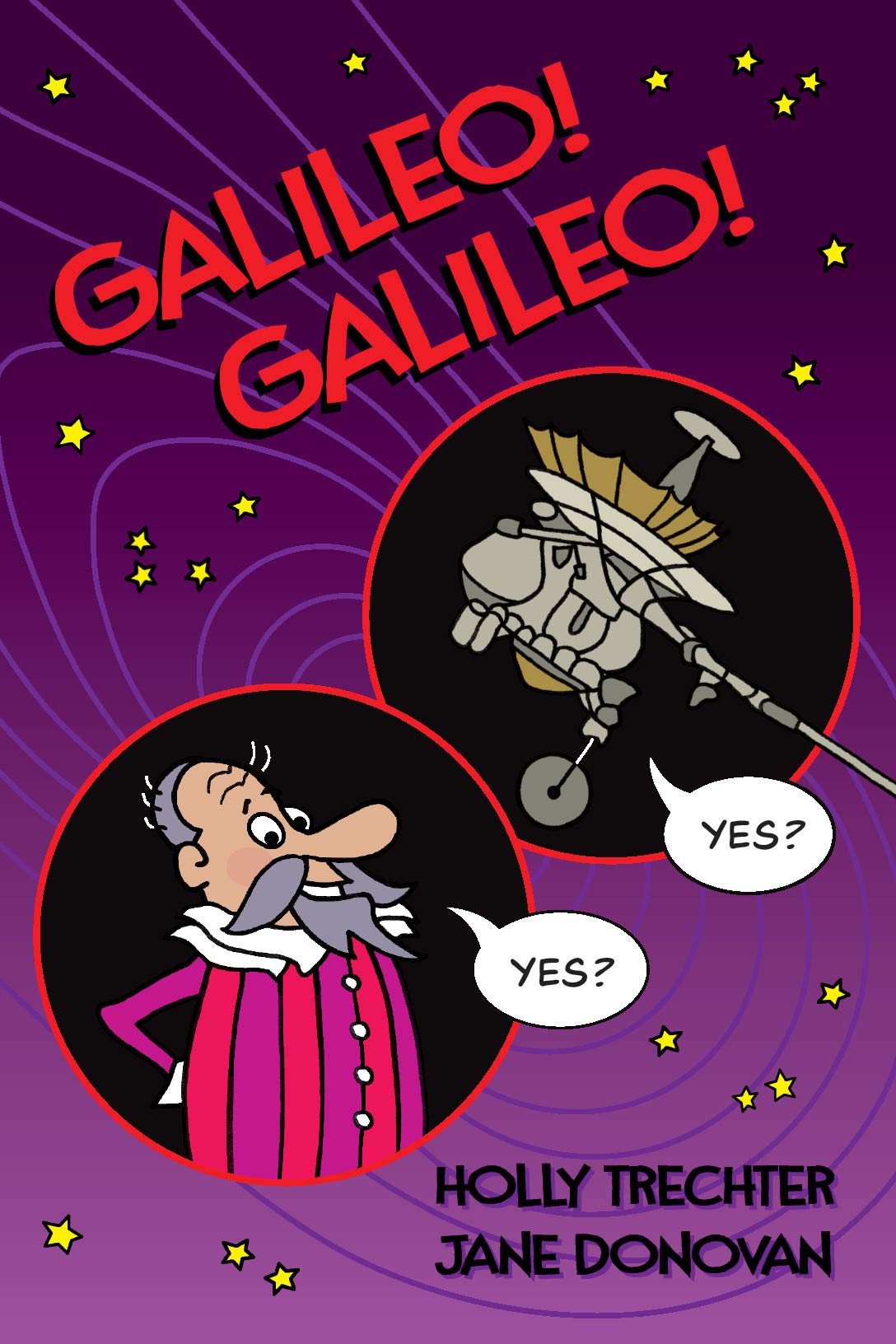

Gr 3-5–Students of the history of space exploration are in for a wild ride, as Galileo himself steps in to narrate a vivid account of the origins, purposes, complex design, and dramatic course of the Jupiter probe that was named for him. The mission, originally conceived in 1974, was plagued by major setbacks on the ground—from the 1986
Challenger disaster, which brought the whole space program to a halt, to an ambush staged by armed environmentalists protesting the probe’s plutonium power source. In 1989,
Galileo was finally launched on a slingshot orbit around Venus, but the problems didn’t stop in space; when the probe entered the asteroid belt, its main antenna failed to deploy. Still, dedicated NASA scientists solved that and other issues and were rewarded at long last by nine years of close-up glimpses of Jupiter and many of its distinctive, mysterious moons before the probe was finally sent plunging into the giant planet in 2003. Though chock-full of specific incidents, discoveries, and details, the tale positively races thanks to an open page design that mingles easily digestible comments and observations with loose mixes of brightly colored cartoon figures in large graphic panels and insets. A set of discussion questions and a substantial source list cap a heady tribute to scientific ambition, ingenuity, and teamwork.
VERDICT Propelled by its dramatic twists and graphic format, this makes a strong bid to launch younger middle grade readers into a continuing fascination with the space program and its achievements.
Be the first reader to comment.
Comment Policy:
Comment should not be empty !!!