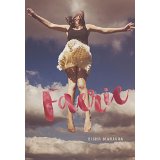

Gr 9 Up—On her 18th birthday, in the midst of a frigid 1980s Quebec winter, Lila, a Canadian girl from a Punjabi Sikh family, runs away from the hospital where she is being treated for anorexia. Quickly caught, she is put under a restricted regime with surprisingly poor supervision. Over the next year, Lila reflects on her marginalization as an ethnic minority, her free-spirited cousin's banishment after she falls in love with a white man, her mother's rich Indian cuisine, the inappropriate attentions of a high school teacher, and her father's physical and emotional distance as she enters puberty. The novel ends on a hopeful if baffling note, as Lila is released to her family's care after opting out of a suicide pact with another patient but still expresses an alarming degree of self-loathing and ambivalence about her weight. Told in the first person, in a tone more adult than teen, most of the story takes place inside the protagonist's head as she is confined alone to her room. The pace is slow, and the titular "faerie" (Lila's name for the inner creature that she believes is freed as she loses weight) and her passion for photography never feel fully developed. Marjara graphically describes unpleasant medical complications, but this volume struggles in a crowded field dominated by stronger offerings, such as Laurie Halse Anderson's
Wintergirls. The book rings mostly true and carries the most emotional power when Lila speaks of her cultural disconnect as the daughter of immigrants.
VERDICT An additional purchase.
Be the first reader to comment.
Comment Policy:
Comment should not be empty !!!