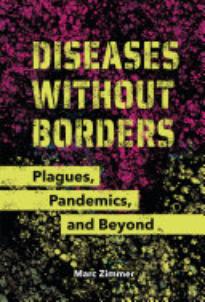

Gr 8 Up–Chemistry professor Zimmer provides a concise and fascinating history detailing the connections between human mobilization, urbanization, and the spread of infectious diseases, from bubonic plagues to COVID-19. Zimmer starts with pre-industrialization and the key types of plagues. He next discusses the 1918 flu and human mobilization, including breaking down different types of influenza. Following this is dengue fever and global urbanization, with fascinating details on how the tightly packed population of cities interact with disease life cycles. A chapter on malaria and climate change provides key information on how warming climates have led to the exposure of zombie pathogens and more waterborne diseases. Going into today’s issues, Zimmer discusses COVID-19 and spillover effects from tightening gaps between humans and animals. Instead of simply ending with this most recent pandemic, Zimmer finishes with an interesting discussion on misinformation and information literacy. The book itself is visually appealing, with smaller vignettes interspersed through the main text, helpful graphs and illustrations, and neon colors to hold attention. Overall, the text is presented nicely for discussing the intersection between a hard science and social science subject matter. Supplementary materials at the end of the book include a timeline, glossary, and selected bibliography.
VERDICT This would make a satisfying complementary piece for a social sciences or humanities class and is worthwhile investment for a library.
Be the first reader to comment.
Comment Policy:
Comment should not be empty !!!