
NONFICTION

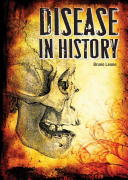
Disease in History

104p. chron. further reading. index. notes. photos. reprods. ReferencePoint. Mar. 2016. lib. ed. $28.95. ISBN 9781601529602; ebk. $28.95. ISBN 9781601529619.
COPY ISBN
Gr 6 Up—Although sometimes brushed over in textbooks, disease has played the role of history's most dangerous villain and has impacted the course of history in significant ways, argues Leone. The first several chapters examine several significant events in early history. For instance, the arrival of typhus in 430 BCE contributed to the defeat of Athens in the Peloponnesian War and led to the decline of Greek hegemony. The Black Death ushered in the end of the Middle Ages; it created such a shortage of labor that the relationship between landholders and workers shifted, reorganizing society. After covering the medieval period, the book shifts gears, concentrating more on scientific advances and less on ways disease has shaped history. The author describes the origins of germ theory and the crucial work of various scientists, beginning in the early 1700s with Antonie van Leeuwenhoek, and covering other significant contributors such as John Snow, Joseph Lister, Robert Koch, and Louis Pasteur. The final chapter addresses the question of whether infectious diseases will ever be conquered. Leone's answer is a resounding no. The material is fascinating and important, but this volume might have benefited from a more sustained focus on the ways disease has affected history. However, students writing papers on the subject will find this offering useful.
VERDICT Packed with fascinating information, this is a good resource for those doing research, but the content doesn't quite match the promise of the title.

Be the first reader to comment.

Comment Policy:
  • Be respectful, and do not attack the author, people mentioned in the article, or other commenters. Take on the idea, not the messenger.
  • Don't use obscene, profane, or vulgar language.
  • Stay on point. Comments that stray from the topic at hand may be deleted.
  • Comments may be republished in print, online, or other forms of media.
  • If you see something objectionable, please let us know. Once a comment has been flagged, a staff member will investigate.


RELATED 

ALREADY A SUBSCRIBER?

We are currently offering this content for free. Sign up now to activate your personal profile, where you can save articles for future viewing

ALREADY A SUBSCRIBER?