

2018 School Spending Survey Report
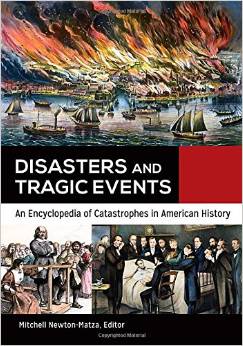
Disasters and Tragic Events: An Encyclopedia of Catastrophes in American History
, ed. 2 vol. 790p. bibliog. chron. ebook available. index. ABC-CLIO. 2014. Tr $189. ISBN 9781610691659; ebk. ISBN 9781610691666. LC 2013028157.
COPY ISBN
 Gr 9 Up—The 216 signed articles and 24 primary source readings in this outstanding set provide information about the interrelated topics of American disasters; catastrophic events; and tragedies, which can be either sudden or ongoing, but always with negative effects or consequences. Articles are grouped chronologically, starting with the beginning of slavery in the American colonies in the 1600s and ending with the Sandy Hook, Connecticut, school shooting in 2012. The events they describe include natural and man-made disasters, battles, epidemics, riots, and tragic societal or governmental policies that resulted in losses of freedom or life. Some topics, such as the Chicago fire, slavery, and the 1929 stock market crash, have received wide coverage, while others (the 1888 School Children's Blizzard and the 1926 Florida hurricane), very little. However, nearly all of the events prompted some type of change. Articles average two to four pages in length and include introductory background, a summary of the event, and analysis of its importance and the changes that resulted. Authors are objective, and entries include a list of references and cross-indexing, supplemented by an extensive general index. These readable, thought-provoking books provide basic research information about some of our country's worst disasters. They will also help readers understand how the events spurred many scientific and medical advances, public safety standards, and political protections of legal and civil rights that are the foundation of much of our modern existence, making them a strong addition to any high school collection.—Mary Mueller, Rolla Public Schools, MO

Added To Cart
RELATED
ALREADY A SUBSCRIBER? LOG IN
We are currently offering this content for free. Sign up now to activate your personal profile, where you can save articles for future viewing
ALREADY A SUBSCRIBER? LOG IN
Thank you for visiting.
We’ve noticed you are using a private browser. To continue, please log in or create an account.

Be the first reader to comment.
Comment Policy:
Comment should not be empty !!!