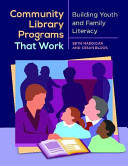
Ideas for ways in which libraries and other institutions can work together to promote literacy are collected from public and school libraries mainly from Canada and the U.S. (Nine chapters arranging the 41 programs thematically comprise the table of contents.) Each program is described in terms of the target audience, community connections, benefits to the organizations, how it works, budget and supplies and marketing. Black-and-white photos of hand-outs and displays are included with some of the descriptions, and contact information is provided. Public libraries are shown to consort with schools as well as museums, parks, chambers of commerce, and some international communities. Descriptions often include sidebars for "Scaling Down" or "Ramping Up." Many of the programs are family oriented such as "Story Walk" in Bridgetown Nova Scotia, which uses panels of story boards on an outdoor trail to encourage physical activity and literacy. Programs that focus on international cultures are featured, such as the Diwali festival at the Fleetwood Branch in Surrey, British Columbia. An initiative developed by IFLA is a cultural exchange program in which Romanian children and Serbian children discuss books online. Another innovative partnership is the Newcomer's Bus Tour in which the Brampton public library in conjunction with local businesses, recreation centers, and city hall offers bus tours to highlight the community's attractions and services. A unique summer program in Saskatchewan, Canada in which teens suggest and complete a series of challenges is called "We Dare You". Public libraries of all sizes and resources will find ideas traditional and digital in this browsable resource.—
Jackie Gropman, formerly at Chantilly Regional Library, VA




Be the first reader to comment.
Comment Policy:
Comment should not be empty !!!