FICTION

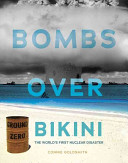
Bombs Over Bikini: The World's First Nuclear Disaster

88p. bibliog. diag. further reading. glossary. illus. index. maps. notes. photos. reprods. websites. Twenty-First Century. Apr. 2014. lib. ed. $34.60. ISBN 9781467716123; ebk. $25.95. ISBN 9781467725453. LC 2013017576.
COPY ISBN
Gr 7 Up—"As soon as the war ended, we located the one spot on Earth that hadn't been touched by war and blew it to hell" (Bob Hope, 1947). Thus begins this chronicle of the period after World War II when the United States detonated 67 nuclear bombs over the Marshall Islands, specifically the Bikini and Enewetak Atolls. Three bombs are discussed in some detail—Able, Baker, and Bravo—but this is not a scientific journal. The decisions of the U.S. to evacuate (or not) the inhabitants of the islands, the countdown, the fallout, the cleanup, and the effects of radiation on the inhabitants and military personnel are all included. The author's focus is on the negative effects of the detonations on the people of the islands and considers that the U.S. knowingly put the lives of the islanders in danger in order to advance the study of radiation. The book ends with a discussion of the money that was awarded to the inhabitants of the islands affected and how most of it still has not been paid. The black-and-white period photos are an excellent accompaniment to the text. A well-written book about a painful piece of history, this is an excellent addition.—Stephanie Farnlacher, Trace Crossings Elementary School, Hoover, AL
This book offers a riveting tale of the aftermath of U.S. nuclear weapons testing in the Pacific. The tests themselves and the lives of the Marshall Islanders directly affected by the resulting radiation contamination are described in engrossing detail. Sidebars, quotes from primary sources, and period photographs supplement the informative and thought-provoking narrative. Reading list, websites. Bib., glos., ind.

Be the first reader to comment.

Comment Policy:
  • Be respectful, and do not attack the author, people mentioned in the article, or other commenters. Take on the idea, not the messenger.
  • Don't use obscene, profane, or vulgar language.
  • Stay on point. Comments that stray from the topic at hand may be deleted.
  • Comments may be republished in print, online, or other forms of media.
  • If you see something objectionable, please let us know. Once a comment has been flagged, a staff member will investigate.


RELATED 

ALREADY A SUBSCRIBER?

We are currently offering this content for free. Sign up now to activate your personal profile, where you can save articles for future viewing

ALREADY A SUBSCRIBER?