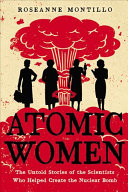

Gr 6-8–Montillo begins the narrative with Marie Curie’s radium discovery and then discusses the prevalent sexism Curie faced as a working mother. Because of sexism, many believed that her husband, Pierre, copublished scientific papers and discoveries only out of a sense of matrimonial duty. The author also unpacks the societal perceptions of some of the most important women in science at that time, including Lise Meitner, Irène Joliot-Curie, and Joan Hinton. Many did not receive praise or funding, were cast aside to closet-sized labs, and often worked without payment or university acknowledgment. They were motivated by their love of science and learning despite the judgment of critics that labeled these women odd, unfeminine, or incapable. The book contains a running theme of women who were dismissed while their male spouses and colleagues moved ahead, but also spotlights perseverance and genius. When some of these women were asked to work on the top-secret Manhattan Project, many seemed uncertain. The world was in the midst of war, and while the immediacy of their creation was felt by all, the future implications seemed dire. Montillo’s detailed and organized writing stresses the importance of these women, who were as indispensable to the Manhattan Project as more well-known men like J. Robert Oppenheimer and Enrico Fermi. The detailed back matter includes an author’s note, a scientific time line, source notes, and bibliography.
VERDICT A general purchase, especially for libraries where narrative nonfiction does well.
Be the first reader to comment.
Comment Policy:
Comment should not be empty !!!