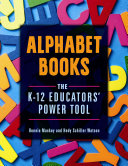

Mackey and Watson prove that the academic possibilities of alphabet books are endless, with opportunities in language arts, math, science, social studies, and the fine arts. Though picture books are typically associated with young children and phonemic awareness or reading readiness, the authors provide examples of titles that may be used in the classroom to enhance learning in various subject areas. Annotations of more than 300 alphabet books across many disciplines feature summaries, grade levels, and descriptions of academic content and instructional value. A chapter of historical background covers the origins of the English alphabet and early alphabet books, such as the popular rhyming abecedaries. "Teaching with Alphabet Books" presents many examples of the utility of these materials for all grade levels and subjects. An informative section on textual structure contains valuable instructional activities for the classroom. A chapter devoted to alphabet books in Spanish and English, with a short list of dual-language offerings, also addresses the importance of acknowledging the traditions and values of English-language learners. These annotations include levels of proficiency from beginning to advanced students, but specific grade levels are not mentioned. Several activities described are accompanied by black-and-white pictures. Though there is an index, it does not include the annotated resources.
VERDICT After reading this enlightening addition, educators will gain an appreciation for alphabet books and the creative ways they can be employed to enrich subjects across the curriculum.
Be the first reader to comment.
Comment Policy:
Comment should not be empty !!!