FICTION

A King Salmon Journey

MILLER, Debbie S. & . illus. by John Van Zyle. 44p. illus. maps. notes. Univ. of Alaska. 2014. Tr $15.95. ISBN 9781602232303; pap. $12.95. ISBN 9781602232310. LC 2013048828.
COPY ISBN
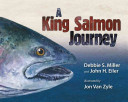
Gr 2–4—Based on a true study, in which Eiler served as a researcher, this informational picture book offers a travel log of one female king salmon's 63-day journey from the Bering Sea to a spawning site up the Nisutlin River, recorded by a radio transmitter placed in the fish's stomach. Through descriptive text, simple maps, and side boxes of data, Miller and Eiler tell the tale of this salmon, referred to as Chinook, clearly explaining the behavior, physical characteristics, and habits of this species. Additional details on changing conditions, obstacles, wildlife, and shoreline along the 2000 plus mile route freshen the writing style. Snippets highlighting the importance of salmon to nearby regions and people draw attention to human dependence on salmon migration. Some adults may question the feelings attributed to the fish ("Chinook feels a powerful urge to return to the freshwater stream where she was born."). Van Zyle's watercolorlike artwork augments the informational value of the book with visuals of not only Chinook but the people and changing environment along the waterway trail. Separate author notes with relevant background and information on conservation have been appended. This book differs from others on the subject in its level of documentation and emphasis on one specific salmon's journey. Bobbie Kalman and Rebecca Sjonger's The Life Cycle of a Salmon (Crabtree, 2007) provides similar information in a more structured format. Jason Cooper's Pacific Salmon (Rourke, 2003) offers briefer treatment, as does Kathleen Martin-James' Swimming Salmon (Lerner, 2003), aimed at a much younger audience. A good introduction to the subject.—Lynn Vanca, Freelance Librarian, Akron, OH
In this engaging fictionalized account of a real salmon's two-thousand-mile journey from the Bering Sea up the Yukon River, Chinook avoids predators and reaches her spawning grounds. Young scientists may appreciate the text boxes of data (e.g., fish's speed, depth, river mile) received from Chinook's radio transmitter along the route. The art adeptly conveys the hazards and scenery of Alaska and Canada. Authors' notes are appended. Glos.

Be the first reader to comment.

Comment Policy:
  • Be respectful, and do not attack the author, people mentioned in the article, or other commenters. Take on the idea, not the messenger.
  • Don't use obscene, profane, or vulgar language.
  • Stay on point. Comments that stray from the topic at hand may be deleted.
  • Comments may be republished in print, online, or other forms of media.
  • If you see something objectionable, please let us know. Once a comment has been flagged, a staff member will investigate.


RELATED 

ALREADY A SUBSCRIBER?

We are currently offering this content for free. Sign up now to activate your personal profile, where you can save articles for future viewing

ALREADY A SUBSCRIBER?