John Peters
422 Articles
Last 30 days
Last 6 months
Last 12 months
Last 24 months
Specific Dates
From:
To:
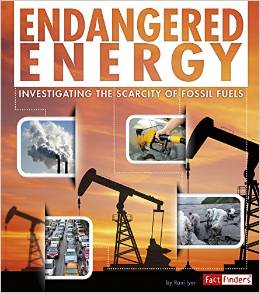
Endangered Energy: Investigating the Scarcity of Fossil Fuels
Despite the flaws, these issues are important, and even if these introductions are stronger on general concepts than specific facts, they should stimulate enough concern to fuel further inquiry.
These volumes point to the role humans have played in endangering
Earth's resources. The information is presented in four chapters;
each book's final chapter focuses on what government and
individuals can do now before it's too late. The choppy texts are
accessible and supported by photos, diagrams, and related fact
boxes. Common Corerelated questions are appended. Reading list.
Glos., ind. Review covers these Fact Finders: Endangered Earth
titles: Endangered Energy and Endangered Rivers.
Animal Pollinators
Suitable additions for those looking for material on plants or flowers.
For seeds to grow, pollen needs to reach a flower's carpel. In
simple language (with potentially difficult words in bold print),
this series teaches early readers about the various ways this
happens; information is often repeated from book to book. Close-up
photos (inconsistently labeled and captioned) of flower structures
and yellow pollen dust on fuzzy bees and bats help readers
visualize the process. Glos., ind. Review covers the following
First Step Nonfiction: Pollination titles: Animal
Pollinators, Cross-Pollination, Insect
Pollinators, Self-Pollination, and Parts of a
Flower.

Your Circulatory System Works!
Useful additions.
These introductions to the human body are very basic, with some
complexity added in fact boxes and captioned photos or diagrams.
One spread in each volume addresses some common disorders (for
example, sprains and spasms in Muscular), though
Nervous also preaches about damage from drug and alcohol
use. Three appended questions link material to the Common Core.
Reading list. Glos., ind. Review includes the following First
Facts: Your Body Systems titles: Your Digestive System
Works!, Your Muscular System Works!, and Your Nervous
System Works!.

Are Humans Damaging the Atmosphere?
Readers studying climate change, pollution, natural catastrophes and related subjects will find these studies low on definitive answers, but rich in points to ponder.
The debates in these titles center on the benefits and/or problems
associated with attempts to circumvent or remedy environmental
depredation. The slim volumes don't get deeply detailed; Chambers's
dispassionate, generally even-handed approach is realistic about
the lack of clear answers to these dilemmas. Relevant photos,
graphs, sidebars, and "eyewitness" accounts supplement the
narratives. Each book includes a quiz. Reading list, websites.
Glos., ind. Review covers these Earth Debates titles: Are Humans
Damaging the Atmosphere? and How Effective is
Recycling?.
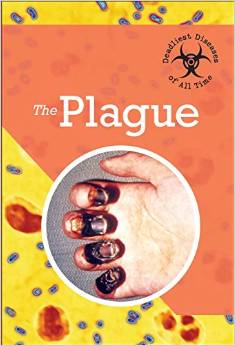

Experiment with a Plant's Living Environment
Not recommended.
Higgins guides young scientists through careful examination of
botany concepts, from parts of a plant and their functions to the
environmental conditions necessary for growth. The classic
activities and explanations are well organized and clearly
illustrated, although a trip to the gardening store will be
necessary for specific materials. Together, the books are
comprehensive; separately, content is thin. Reading list, websites.
Glos., ind. Review covers the following Lightning Bolt Books: Plant
Experiments titles: Experiment with a Plant's Living
Environment, Experiment with a Plant's Roots,
Experiment with Parts of a Plant, Experiment with
Photosynthesis, Experiment with Pollination, and
Experiment with What a Plant Needs to Grow.
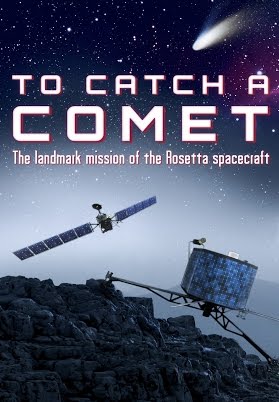
To Catch a Comet
This has its merits as a picture of science in action and also as a reminder that NASA isn't the only space agency in town.
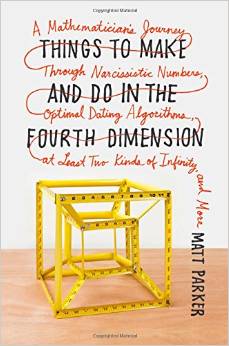
Things to Make and Do in the Fourth Dimension: A Mathematician's Journey Through Narcissistic Numbers, Optimal Dating Algorithms, at Least Two Kinds of Infinity, and More
Gr 8 Up—For readers who haven't balked at Stephen Hawkings's A Brief History of Time (Bantam, 1988) or Robert P...
ALREADY A SUBSCRIBER? LOG IN
We are currently offering this content for free. Sign up now to activate your personal profile, where you can save articles for future viewing
ALREADY A SUBSCRIBER? LOG IN
Thank you for visiting.
We’ve noticed you are using a private browser. To continue, please log in or create an account.