BANSCH, Helga
3 Articles
Last 30 days
Last 6 months
Last 12 months
Last 24 months
Specific Dates
From:
To:

At Night
 The concept, humor, and scenes brimming with personality justify repeated readings—well beyond bedtime.—Wendy Lukehart, District of Columbia Public Library
This Austrian import makes something gentle and quizzical of the end of the day as a young boy loosens his hold on daytime reality and falls asleep. The book begins by introducing, in a series of double-page spreads, eight animals "at night," sleeping in their rightful places: bird in a nest, leopard on a tree branch, elephant in tall grass. Ninth is Manu, our protagonist, cozily tucked in with a companionable toy crocodile. Flipping the book over offers another, more abstracted picture of the night, as Manu dreams. Now the animals from the first narrative switch places: the elephant sleeps in the bird's nest, etc.-"and some nights Manu sleeps on a cloud, and dreams of chocolate and raspberry ice cream." Both narratives end in the middle with a spread showing two large circles, representing moons...or holes in the fabric of the material world...or something else entirely that recalls the balloons and balls dotting the art throughout the book. Bansch's atmospheric images, saturated with rich color, layer scratchy animal portraits atop collages of newsprint and tissue. Careful, consistent design, with black text appearing in a uniform column of ivory along the same side of each page, establishes a dependable structure inside of which the book's less tangible elements can play. thom barthelmess
This Austrian import makes something gentle and quizzical of night as a young boy falls asleep. In a series of spreads, eight animals sleep in their rightful places; ninth is Manu, the boy. Flipping the book over offers another, more abstract picture as Manu dreams: the animals switch places. Bansch's atmospheric images, saturated with rich color, layer scratchy portraits atop collages of newsprint and tissue.
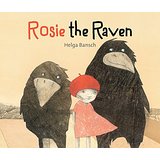
Rosie the Raven
This offbeat, low-key tale of self-acceptance presents an understated but effective example of tolerance and appreciation of difference.

ALREADY A SUBSCRIBER? LOG IN
We are currently offering this content for free. Sign up now to activate your personal profile, where you can save articles for future viewing
ALREADY A SUBSCRIBER? LOG IN
Thank you for visiting.
We’ve noticed you are using a private browser. To continue, please log in or create an account.