Peterson, J. C
333 Articles
Last 30 days
Last 6 months
Last 12 months
Last 24 months
Specific Dates
From:
To:

Follett Launches New Version of K–12 Digital Bookshelf
Follett’s new back-to-school release of its FollettShelf hosted digital bookshelf—which includes a new HTML5 reading environment for econtent called Follett Enlight—is now available for schools to download this week via apps for GooglePlay and iOS, even though it does not yet appear in searches of Apple’s iTunes store, the company assures School Library Journal.

Welcome Back to Heavy Medal, Someday My Printz Will Come Blogs
Labor Day has come and gone, and this week marks the start of a new school year and the return of millions of students. Here at School Library Journal, we’re also celebrating two triumphant returns this week: those of our popular blogs Heavy Medal and Someday My Printz Will Come.

Queens Library (NY) Starts Work on Cambria Heights Teen Center
The Queens Library branch in Cambria Heights, NY, celebrated the start of work on its new 4,000-square-foot Teen Center with a ceremonial wall-breaking last week. The library hopes to open the space—which will include a Cyber Center, a lounge and gaming area, a sound recording booth, a meeting room, and a reading room—by next spring.

Educators, Parents Fight NYC Bid to Bypass State Mandate for School Librarians
New York City’s librarians, teachers, and parents are prepping for a major battle with the city’s Department of Education on the heels of its official request to the New York State Education Department last week that it be exempted from state minimum staffing requirements for certified school library media specialists. The city’s move follows years of quiet noncompliance with the state mandate despite two petitions from the local teachers union to the State Commissioner of Education.
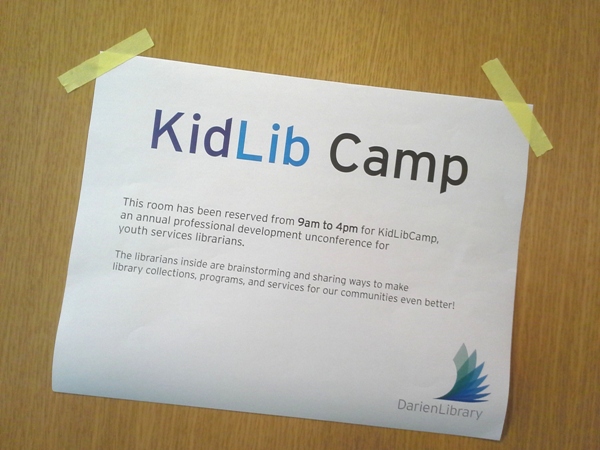
Buzz, Brainstorming Mark KidLibCamp 2013
Nearly 50 children’s and teen librarians met last week at Darien Library (CT) for the fifth annual KidLibCamp, a free “unconference” in which the discussion topics, panels, and workshops are voted on by the participants. Attendees explored best practices in 12 interactive breakout sessions with several common takeaways: that innovative programming can be achieved at little start-up cost; librarians need to better market existing programs to their patrons; and partnering with schools and communities is critical to the future of our libraries.
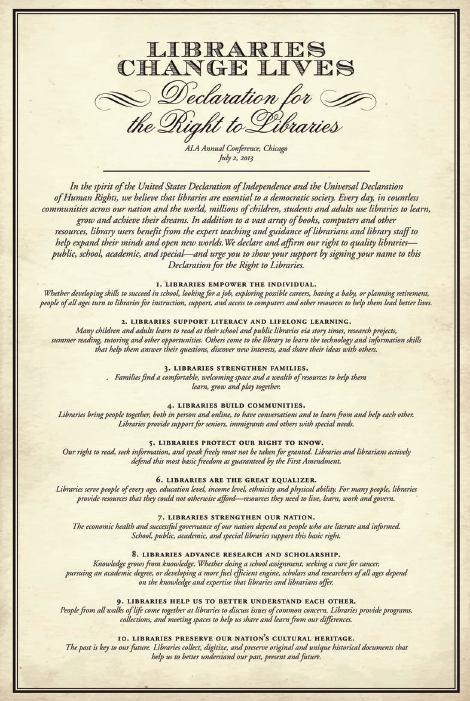
ALA Hosts First 'Declaration for the Right to Libraries' Signing
American Library Association (ALA) President Barbara Stripling unveiled the “Declaration for the Right to Libraries” on Monday during a signing ceremony at Nashville Public Library, the first in a series of signing events the ALA plans to host across the country in the coming months.

Maine State Librarian Touts E-Rate Success to Senate
Linda Lord, Maine’s state librarian, represented the nation’s 16,400 public libraries Wednesday in her call to Congress to provide a “proactive vision for meeting the educational and learning needs of our communities for the next 15 years and beyond.” Her testimony—at a hearing of the U.S. Senate Committee on Commerce, Science and Transportation—also detailed the success of the E-rate program in helping serve more than 30 million people every week.
NEA Votes to Support AASL in Lobbying for 'Strengthening America’s Schools Act'
The National Education Association this week voted to support the American Association of School Librarians (AASL) in its lobbying efforts with regard to the "Strengthening America’s Schools Act," the first piece of legislation to recognize the role school library programs play in student learning since 1965, according to the American Library Association.

Breaking Bias: Inside Maureen Johnson’s ‘Coverflip’ Challenge
Can you imagine what the covers of classic literary works written by men might look like if those books had been reclassified as “by and for women”? How would the designs be different—and how would that impact how we perceive those books? These are the questions YA author Maureen Johnson posed to her fans in “Coverflip,” a challenge to gendered book covers that limit their audiences.
ALREADY A SUBSCRIBER? LOG IN
We are currently offering this content for free. Sign up now to activate your personal profile, where you can save articles for future viewing
ALREADY A SUBSCRIBER? LOG IN
Thank you for visiting.
We’ve noticed you are using a private browser. To continue, please log in or create an account.