Lauren Barack
204 Articles
Last 30 days
Last 6 months
Last 12 months
Last 24 months
Specific Dates
From:
To:
Vermont School Librarians Win—And Are Recognized in State Standards Once Again
In August 2013, the Vermont School Library Association discovered the requirement for their jobs was being removed from the language of the state's Education Quality Standards. In response, school, university, public, and state librarians campaigned to become a requirement in state standards once again—and won.

California's Modesto City Schools To End Library Instruction for Elementary Schools
Modesto City Schools (MCS) is set to end all library instruction for its elementary schools for the 2014-2015 school year—while keeping the school library open with library assistants.
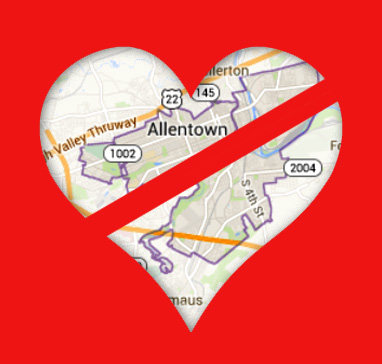
School Librarians Get No Love in Allentown School District
Once staffed with 13 elementary school librarians and four middle school librarians, today Allentown (PA) School District now has one district elementary school librarian serving all 15 elementary schools and two middle school librarians split among four middle schools.
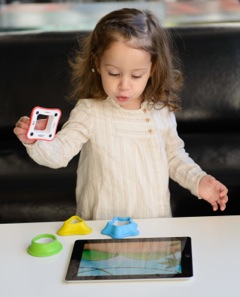
Weaving Together Touch and Digital into Early Childhood Play
Experts have found that physical touch and hand movements are important for brain development and learning—crucial aspects to be aware of when creating apps and other digital programs for children.
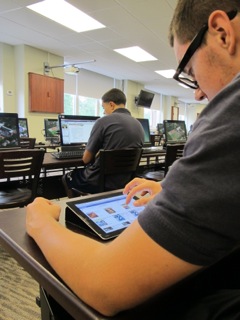
New York High School Goes Entirely Digital
This year, New York's Archbishop Stepinac High School saw its entire textbook collection transition to a digital library.
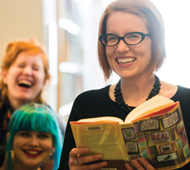
LGBTQ & You: How to Support Your Students
School librarians can provide pivotal support for LGBTQ teens by just being there.
January 2014 YALSA Report Serves As a Guide for Library Community's Youth Services Best Practices
Published in January 2014, the YALSA report “The Future of Library Services for and with Teens: A Call to Action” addresses the need for a national conversation around how young adults are served by libraries today—and how to better position library centers to foster and drive learning in the future. The report is also being seen as set of best practices, which YALSA will use to re-evaluate its own best practices guidelines, says Beth Yoke, YALSA’s director.
San Diego Schools May Restore Some Library Services in Upcoming School Year
School library access in San Diego's school district has been greatly reduced since a budget slash in 2008, and the outlying community having been vocal about restoring student access to its school libraries. The San Diego Unified School District has been listening, and may widen its severely curtailed school library access in 2014-15.

It’s an Ebook World for Young Readers 13 and Under Says PlayCollective Report
The majority of students 13 and under are picking up e-readers to enjoy their favorite reads—with 92 percent doing so at least once a week—reveals the report “Exploring the E-Reading Habits of Children."
ALREADY A SUBSCRIBER? LOG IN
We are currently offering this content for free. Sign up now to activate your personal profile, where you can save articles for future viewing
ALREADY A SUBSCRIBER? LOG IN
Thank you for visiting.
We’ve noticed you are using a private browser. To continue, please log in or create an account.